

This is the second year that we’re designating July as Black Love Month. As Dionne Warwick reminded us in song, What the World Needs Now is Love Sweet Love. The “Teen Takeovers” that are literally taking over our neighborhoods are stark reminders of the need for more love – especially for our children. For years, Soft Sheen founder Ed Gardner championed Black on Black Love and now that Ed and Bettianne Gardner have become ancestors, South Side Drive Magazine is continuing the quest to spread Black-on-Black Love, as we guide our readers to the good life with stories that motivate, educate, inspire and speak love.
Love on the South Side has rarely announced itself. It has shown up in the early morning hours of a newsroom, in the office of a beauty supply company, in the quiet rooms of a museum that almost nobody believed could exist. It has shown up in the ordinary devotion of two people who decided that their love would mean something beyond themselves.
This Black Love Month, we bring you four stories of love that took root and blossomed on Chicago’s South Side.
Lu Palmer and Jorja English: Love at the Frontlines
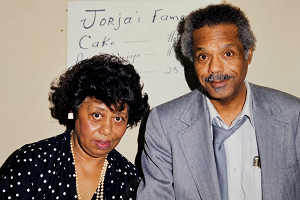
Lu Palmer stood at the center of Black Chicago’s political awakening. A journalist, broadcaster, and unapologetic activist, Palmer spent decades using his platform to push Black Chicago toward self-determination. His voice carried through WVON radio, through his newsletter Black X-Press, and through the streets of the South Side where he organized, agitated, and demanded accountability from City Hall.
Beside him stood Jorja English – his partner, his anchor, and a force in her own right. English brought her own commitment to community and culture to the relationship, and together they embodied something the South Side has always understood: that love and justice are not separate callings. The most sustaining relationships in Black life have always carried a sense of purpose larger than the couple themselves.
Palmer’s most celebrated chapter came with his relentless push to elect Harold Washington as Chicago’s first Black mayor in 1983. That campaign consumed everything – time, energy, resources, reputation. The kind of work that breaks lesser partnerships. Theirs endured. Jorja English stood in that work with him, and when Washington won, that victory belonged to both of them in ways the history books rarely record.
Lu Palmer and Jorja English remind us that love on the South Side has often looked like shared conviction – two people who chose each other and chose their people at the same time.
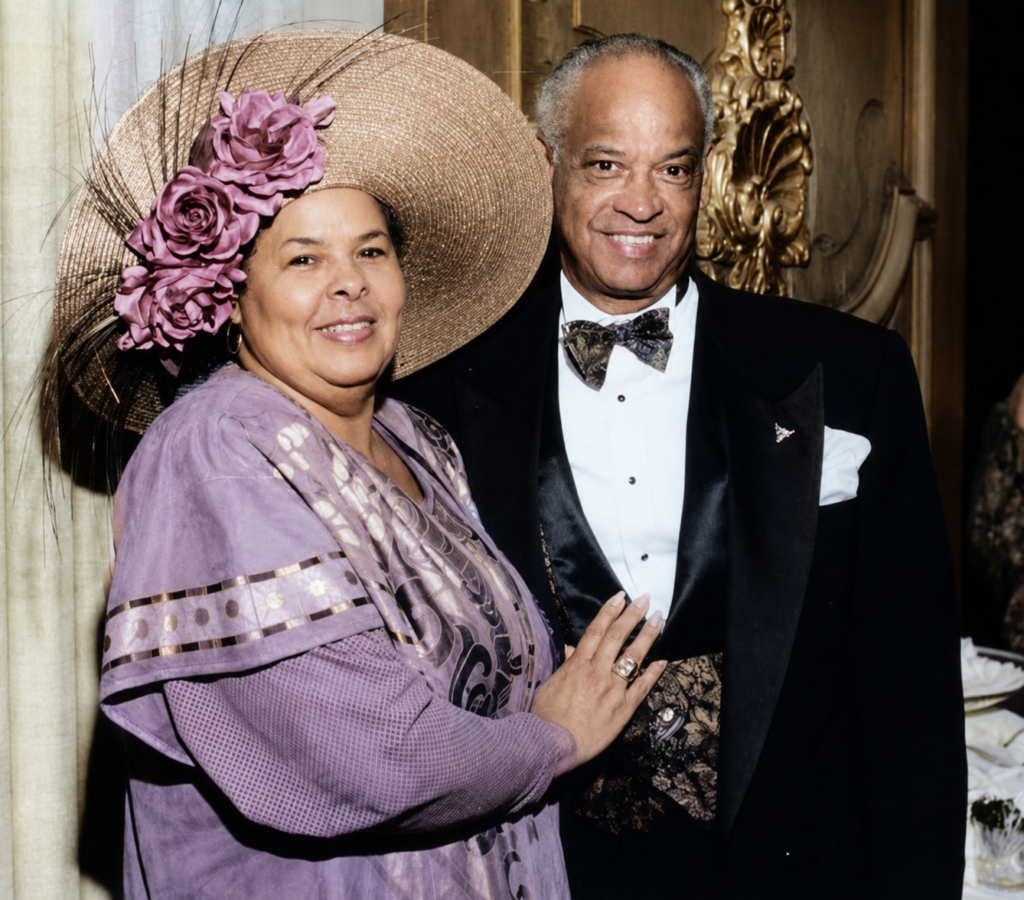
Ed and Bettiann Gardner: Building an Empire, Building a Life
Edward Gardner graduated from Fenger High School, and later met the love of his life, Bettiann Gueno, a graduate of DuSable High School. They met and married in 1950 and never left the South Side. In fact, Ed Gardner lived his entire life and raised his family in the Chatham home in which he was born.
Bettiann and Ed Gardner built Soft Sheen Products from a South Side dream into one of the most successful Black-owned businesses in American history. At its peak, Soft Sheen employed hundreds of people, generated tens of millions in revenue, and put the South Side on the map as a center of Black entrepreneurship. The brand’s flagship product, Carefree Curl, became a cultural touchstone across Black America.
Bettiann Gardner stood at the center of that story. The Gardners built Soft Sheen together – as business partners, as community pillars, and as husband and wife. Bettiann’s role in shaping the company’s culture and community commitments ran deep. Soft Sheen became known not just for its products but for its investment in Black neighborhoods, Black employees, and Black futures.
What the Gardners built together demonstrates something essential about Black love in its fullest expression. Love as infrastructure. Love as employment. Love as a bet on your community that pays out for generations.
Their partnership produced a company that eventually sold to L’Oréal for a
reported $160 million – a transaction that sparked complicated feelings across Black Chicago about ownership and legacy.
The Gardners had created something so valuable that the world wanted it. That is its own kind of love story.
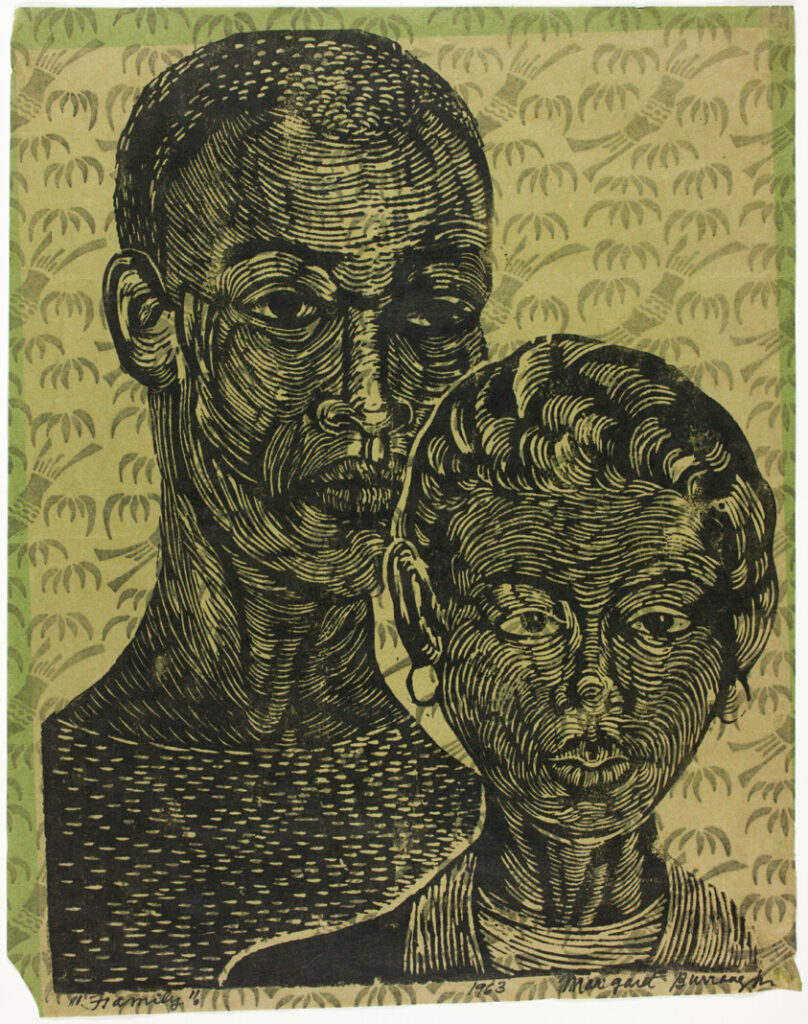
Margaret and Charles Burroughs: Love That Built a Museum
In 1961, Margaret and Charles Burroughs turned their South Side home at 3806 South Michigan Avenue into something the city had never seen – a museum dedicated to the history and culture of African people. They called it the Ebony Museum of Negro History and Art. The world would come to know it as the DuSable Museum of African American History, now one of the oldest and most significant institutions of its kind in the country.
Margaret Burroughs was already a giant – poet, painter, printmaker, educator, and co-founder of the South Side Community Art Center. Charles Burroughs matched
her vision and her commitment. Together they opened their home, donated their collection, and invited Chicago’s Black community to see itself reflected in history, in art, in the full dignity of its own story.
They charged no admission in those early years. They operated on belief and very little else. The love that built that museum was the love of two people for each other, for their culture, and for the children of the South Side who deserved to know where they came from.
Margaret Burroughs lived to 99 years old, leaving behind a legacy so vast that it still expands. Charles Burroughs walked that path beside her. Their love produced something permanent – walls, collections, and a sense of history that the South Side carries forward every day.
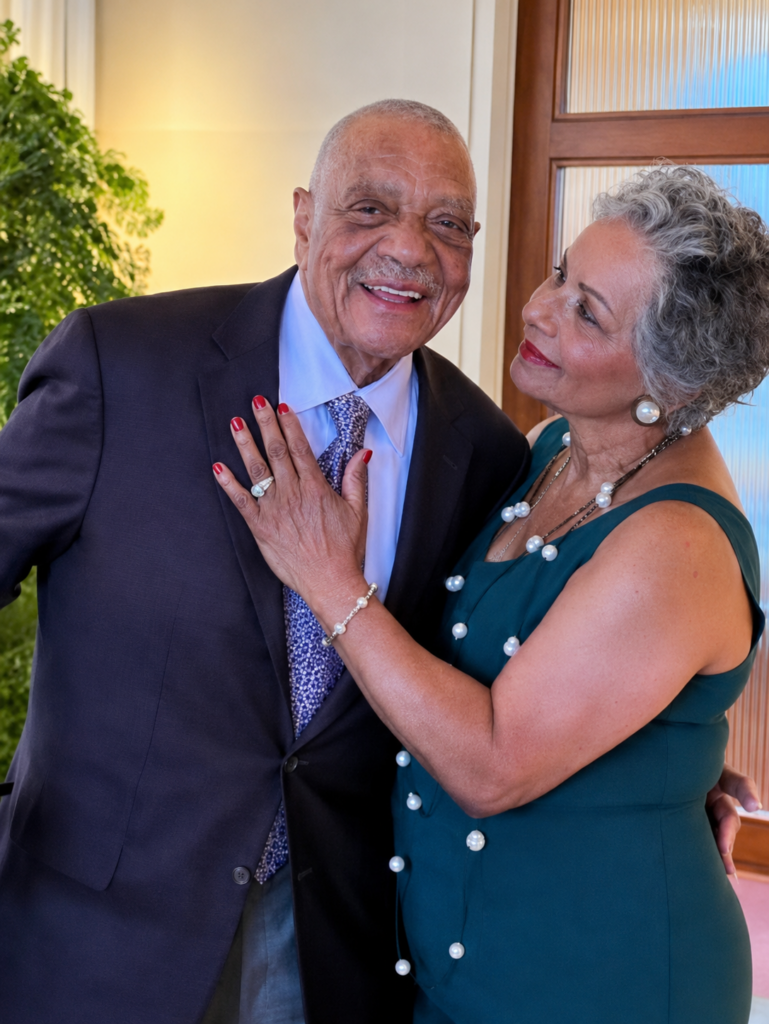
George Johnson: A Man Who Kept Believing in Love.
George Johnson met Joan Betty Henderson when they were both students at high school on the South Side. They married in May 1950, young and full of ambition, and what they built together over the next four decades rewrote the story of Black entrepreneurship in America.
Johnson Products Company, which the couple co-founded in 1954, became the first Black-owned business listed on the American Stock Exchange. Their flagship product, Ultra Sheen, landed in Black households across the country and established the South Side as a center of Black beauty innovation. When George Johnson brought his resources to Soul Train as an early sponsor, he helped give that landmark television program the financial foundation it needed to reach millions of Black homes every Saturday morning.
Joan Johnson ran the business side of the company with precision and vision, managing finances and operations while George led product development and
marketing. Their partnership produced a company that made history – and it produced a family, four children who grew up watching their parents build
something extraordinary from the South Side of Chicago.
They divorced in 1989 after nearly four decades together. Six years passed. Then in 1995, George and Joan Johnson remarried – a quiet, profound decision that speaks to something the South Side has always known about love. Some bonds carry too much history, too much shared meaning, to release entirely. Joan Betty Johnson remained George’s wife until her death in 2019, sixty-nine years after they first said yes to each other as young people with a dream.
George Johnson’s capacity for love did not end there. In March 2022, he married
Madeline Murphy Rabb – a deeply accomplished South Side figure in her own right, a celebrated arts administrator, former U.S. Ambassador to Finland, and one of Chicago’s most respected cultural voices. Their union brought together two
people who had each spent a lifetime building something meaningful for their
community. George Johnson passed with Madeline beside him, a man who had loved fully and chosen love again, more than once.
His story stands as one of the South Side’s most complete – built in youth, tested by time, chosen again in middle years, and embraced with an open heart all the way to the end.
The Lesson the South Side Keeps Teaching
These four couples share something beyond geography and era. Each of them
understood that love, at its most powerful, reaches beyond the two people inside it.
Lu and Jorja built a movement. Ed and Bettiann built an economy. Margaret and
Charles built a monument. George Johnson built an empire, found his way back to his first love, and then opened his heart one final time.
The South Side has always produced this kind of love – the kind that shows up
quietly, works without applause, and leaves something standing long after the
lovers themselves are gone. We encourage you to further research these
extraordinary couples.
This Black Love Month, we honor them. And we honor every couple on every
block of this community who chose each other, stayed, and built something that mattered.