

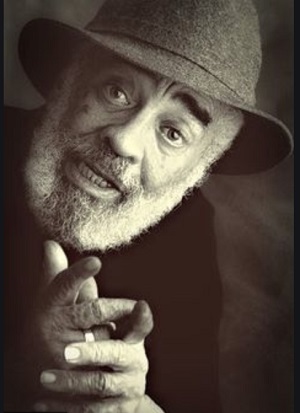
Oscar Brown Jr exemplified creativity in every way. He was a writer, poet, actor, singer, musician, and playwright — loved around the world, but a Chicago original at heart.
Brown Jr. is often credited with introducing spoken word onto the musical scene. His daughter, Maggie Brown, calls him “the Granpap of Rap.”
Maggie Brown tells her father’s origin story: his father was an attorney who hoped his son would follow him into law, but Oscar, as she puts it, “got bit by the writing bug” and chose to write and act instead.
At fifteen, Oscar was recruited by journalist and radio producer Studs Terkel to star in the show Secret City as Lowell Prayor, a young mechanic and blue-collar
hero. He later worked with Richard Durham on Destination Freedom, a Black-history radio drama, before producing his own show, Kicks and Company — which caught the attention of Sammy Davis Jr., Steve Allen and Dave Garroway. Maggie tells us that Dave Garroway fell in love with Oscar Brown Jr.’s talent and eventually gave the show two full hours a week on the Today Show.
Brown also became a prolific lyricist, setting words to jazz instrumentals by Bobby Timmons, Miles Davis and others. His lyrics have since been recorded by Lou
Rawls, Roberta Flack, Dee Dee Bridgewater, Dianne Reeves, Gregory Porter, Robert Glasper and Erykah Badu.
His lyrics continue to be relevant today, informing generations about Black history and Black culture in compelling ways, often laced with touches of humor. Yet he was more than a lyricist, more than a singer and stage entertainer; he was also a great playwright.
When Muhammad Ali was barred from boxing after refusing induction into the Army, Brown cast him in Buck White, adapted from Joseph Dolan Tuotti’s Big Time Buck White. The show reached the Ed Sullivan stage but closed after one of Ali’s lines — “Mighty whitey, it’s all over now” — struck some as too provocative.
In 1967, Maggie says, “Daddy went to do a show for the Blackstone Rangers and ended up doing a show with them.” She said he discovered the young men had a great level of talent and ability and he was determined and focused on, not only helping them by coming to their economic rescue by using their talents but also helping them to become a political force and to become more organized around aiming their aggression toward organizing. “Instead of focusing their anger on rival gangs over turf they really didn’t own,” she said, “he wanted them to focus toward doing things to better their community, to learn to make the powers that be more accountable,” she said.
It was around this time he coined a term now in wide use: edutainment, entertainment meant to educate, uplift and unify.
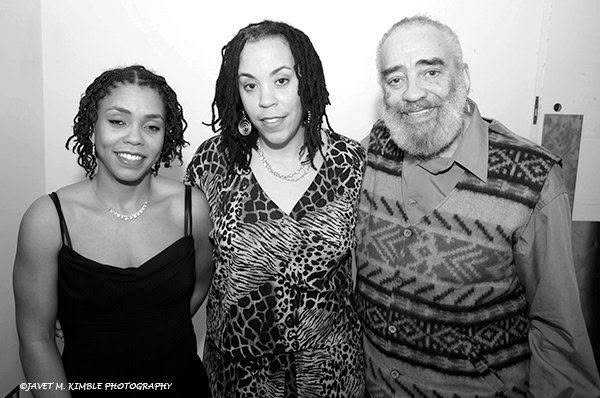
The family also carries forward his philosophy of being “HIP” — Human Improvement Potential — rooted in wisdom, health, compassion and creative ways of loving, free of negative self-indulgence.
Maggie describes her father as a deep thinker whose essays could be as pointed as his songs. In a piece he wrote called “Axe,” he argued that descendants
of formerly enslaved people, who were suddenly freed and “shrouded in a cloak of citizenship,” should not owe taxes without reparations. In “Forty Acres and a Mule,” he wrote of the promise made to freed slaves and never kept: “I want my 40 acres and my mule.”
“Thank God he believed in nepotism,” Maggie says. Whether in the show, at the box office or ushering, he made sure his children were involved.
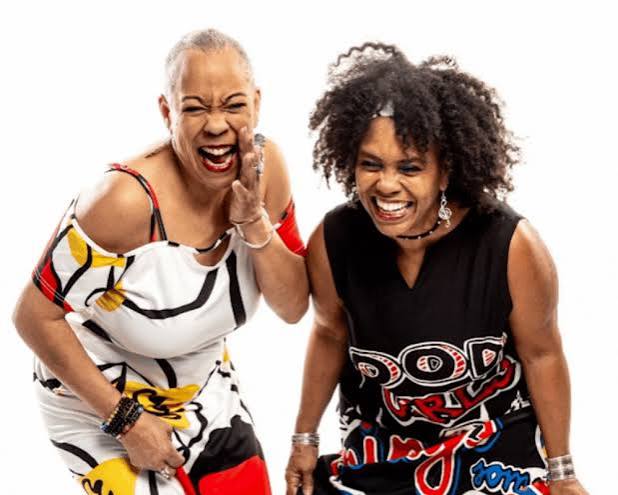
Maggie is the second-youngest of Oscar Brown Jr.’s seven children — David “Napoleon,” Donna, Joan, Ithana, Oscar III, Maggie and Africa. She and her brother Oscar III, known as Bobo, a bassist, singer, songwriter and poet, often performed with their father. “There was nothing more thrilling than the three of us on stage,” Maggie says. Bobo died in a car accident in 1996. In 2020 and 2021, Africa began performing alongside Maggie and their father, joining him for a live recording at the Hot House — his last — that marked the first time both daughters recorded with him together.
A few years ago, watching centennial tributes planned for icons like Louis Armstrong and Ella Fitzgerald, Maggie decided her father deserved the same. She and Africa have since been preparing to spotlight his catalog — musical plays like Journey Through Forever, which explores aging, the beloved children’s song “Dat Dere,” and the iconic revue The Great Nitty Gritty. His book, What It Is: Poems and Opinions of Oscar Brown, Jr., is available at oscarbrownjr.org.
Oscar Brown Jr’s work has stood the test of time. Millions still love and remember his songs and poems. Ironically, Donald Trump began using Oscar Brown, Jr’s. poem ‘The Snake” as his own in 2016 and continued to use it at rallies and even the Republican National Convention until 2024.. Maggie Brown shares, “It was so ironic that the lyrics caused the snake to quote The Snake from the other side. He made like he was a rock star and that was his hit song. He raised a lot of money off that song, and we didn’t get a dime.” What Maggie and her family did get and continue to receive is the love and respect of music lovers throughout the world.
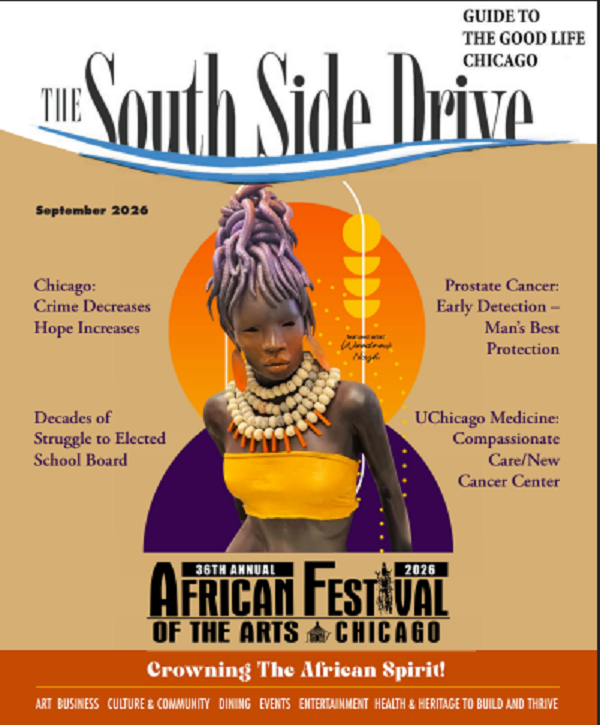
The Brown family invites Chicago to join them October 10, 2026 to celebrate the life and legacy of Oscar Brown Jr.