

Sharon Morgan changed the world of advertising, carried Black America’s soul to Jamaica and Paris, and taught the descendants of enslaved Africans how to trace their roots – tracing her own back nearly to the beginning. She was a queen, an innovator, a chef, a granddaughter of Africa and daughter of Mississippi, an author, a historian, a mother, and a Mensa member – one of some 150,000 in the world’s oldest high-IQ society.
When advertising and public relations had nothing to do with each other, Sharon Morgan brought her PR agency into Burrell Advertising and showed clients the two disciplines belonged together – a first that is now so standard some assume it was always so. The timing was perfect: Stevie Wonder had just won his campaign to make Dr. Martin Luther King, Jr.’s birthday a federal holiday, and Morgan persuaded McDonald’s to be among the first advertisers to mark the occasion with a national PR campaign she created, paired with a Burrell advertising campaign.
Sharon left the PR and advertising world far too young, but her spirit wouldn’t let her dreams stall in a corporate culture. She had so much more than PR words, ideas, and events to give to the world. Anyone who knew Sharon knew she was a heck of a cook – a gift given to her by her grandmother, Maw Maw, and a gift she gave back to the community, through the community-focused cookbook she co- authored: “Real Women Cook: Building Healthy Communities With Recipes that Stir the Soul.”
Armed with superior cooking skills and a warm personality, she opened a restaurant that became the go-to destination for both native Jamaicans and the Chicago crowd vacationing in the land of Rastafari.
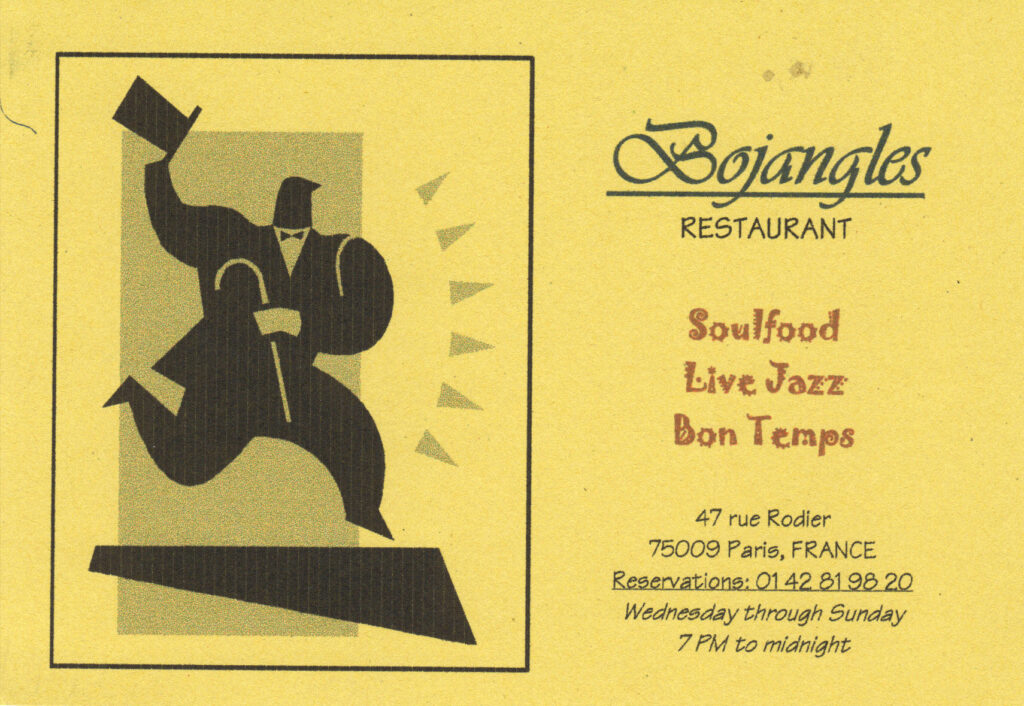
After a good run in Jamaica, she moved on to Paris to perfect her French and write a cookbook on Pan African cuisine. She opened a second restaurant, naming it Bojangles in honor of tap dancer, actor, and singer Bill “Bojangles” Robinson. It featured Pan African soul food and live music – until September 11, 2001.
In Sharon’s words, “After 9/11, everything dried up in Paris– nobody was coming out – we went months with no customers.” Her father passed, her mother fell ill. She closed Bojangles, came home, bought a house in Bronzeville, and cared for her mother for two years until she passed.
She then retired into life as a full-time writer, genealogist, and social justice advocate – with paying clients and purpose. As she put it, “I put my stuff in storage and married the man from France.” That man was Jean-Paul, a Cameroonian immigrant she had met in Paris.
She recounted that chapter – meeting Jean-Paul, moving to France, living inside its culture and contradictions – in her memoir, “Paris in a Pot: Living a Dream in the City of Life.” She also explored her ancestry, a journey that led her to the very plantation where her enslaved ancestors were born.
In January 2026, she shared with her Facebook community that her opinion piece, “I Have Chosen to Die in Mississippi,” had been published in the Mississippi Free Press. In it, she recalled how her mother had refused to let her spend summers in Mississippi with classmates – because Emmett Till, a Chicago pre-teen, had been lynched there while visiting family. She wrote of her first home in Mississippi, an antebellum mansion, and said:
“Mississippi is the poster child for all that is wrong with America. That is what some people think. In many ways, they are right. The historical record is replete with innumerable instances of egregious behavior, particularly against African American people. Nina Simone’s classic anthem, “Mississippi Goddam,” popularized during the 1960’s Civil Rights Movement summed it all up.”
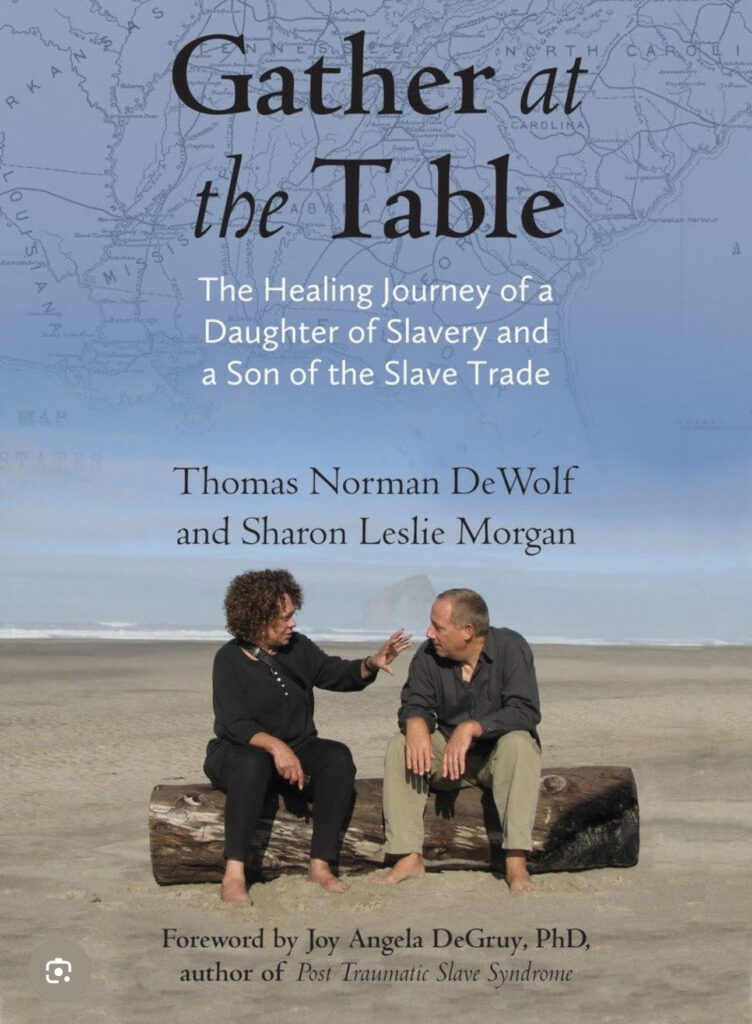
“In my work as a family historian, I discovered the wisdom of how to heal historical harm. My discovery began in 2012 when I embarked on a journey to uncover my past. I partnered with a stranger – a white man who descended from the largest slave trading family in American history. We recounted our adventure in a book, “Gather at the Table: The Healing Journey of a Daughter of Slavery and a Son of the Slave Trade.”
“What I learned is that the process for healing historical harm is to confront the truth of the past, make connections with others, work toward healing and take action.”
“Years later, I have succeeded greatly in being accepted into my “new” Mississippi homeplace. I serve on boards of community organizations. I attend weddings and funerals. I cook and share food. Friends come help me as I endure daunting health challenges.”
“My little town of 2,200 people is a beacon of light as America copes with the treacherous times in which we now live. Mississippi has the opportunity to be an example of transformation from “what was” to “what can be.” I pray we will embrace that challenge and make it so.”
“Let’s turn, “Mississippi Goddam” into ‘Mississippi Hallelujah.”
On February 24, 2026, Sharon Morgan left her home in Mississippi to join her Ancestors.