


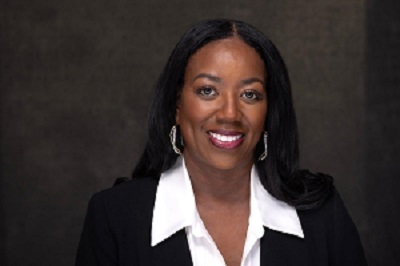
How Tonya Trice is reshaping a historic community through community ownership and a vision.
In Chicago’s South Shore neighborhood, the conversation around development has never been simple. Located along Lake Michigan, rich in history, and home to one of the country’s last predominantly African American waterfront communities, South Shore has carried both the weight of disinvestment and the promise of renewal.
Helping to lead that renewal is Tonya Trice, Executive Director of the South Shore Chamber of Commerce and the South Shore Community Development Corporation, whose work is redefining what community development can look like when it is led by the people it is meant to serve.
Trice’s approach to economic revitalization is not focused on quick fixes or surface-level improvements. Instead, it is shaped in a long-term vision. One that prioritizes stability, ownership, and sustainability in neighborhoods that have historically been overlooked. With a background in commercial real estate development and a focus on equitable growth, she has built a career around transforming underutilized spaces into thriving economic corridors. Her work goes beyond simply filling vacant storefronts. It is about reimagining entire commercial ecosystems, considering how each business, public space, and community resource interacts to create a vibrant, interconnected neighborhood. Each initiative is carefully designed to strengthen local networks, foster collaboration among residents and businesses, and ensure that economic growth truly benefits the people who live, work, and thrive in South Shore.
Planning for Lasting Impact
Through intentional planning and coalition-building, Trice has led efforts to stabilize commercial properties, attract businesses that align with community needs, and create spaces that reflect the culture and identity of South Shore. These initiatives often incorporate streetscape improvements, small business support, and community- centered programming – tools that not only enhance the physical environment but also encourage residents and visitors to reinvest their time, energy, and dollars locally.
The impact of this work is both visible and structural. Vacant properties that once symbolized disinvestment are being repositioned as opportunities. Partnerships across public, private, and philanthropic sectors have strengthened the foundation for long- term growth. And perhaps most importantly, the narrative around South Shore is beginning to shift, from one of scarcity to one of possibility.
A defining element of Trice’s leadership is her unwavering commitment to ensuring that development does not happen to the community, but with it, meeting the needs and changes of residents.
This philosophy is most clearly reflected in the creation of the “We the People” Community Investment Vehicle (CIV), an innovative model developed under her direction at the South Shore Community Development Corporation. The CIV allows residents to pool their financial resources and collectively invest in neighborhood assets, creating a pathway for shared ownership and wealth-building.
Tonya explained: “The CIV was established as a Benefit Corporation – a for- profit entity with a legal obligation to provide a public benefit. That public benefit is community wealth building, regardless of socio/economic conditions. All residents can contribute to this shared development strategy, creating a sense of pride and most importantly, community impact”.
Putting the Community First
In a city where development has often led to displacement, this model offers an alternative. It centers residents as stakeholders rather than spectators, giving them a direct role in shaping the future of their neighborhood.
By aligning economic growth with community ownership, the CIV represents a shift toward development that is not only inclusive but also sustainable.
For Trice, this work is deeply intentional. Preserving South Shore’s identity while expanding its economic opportunities is not a trade-off; it is the goal.
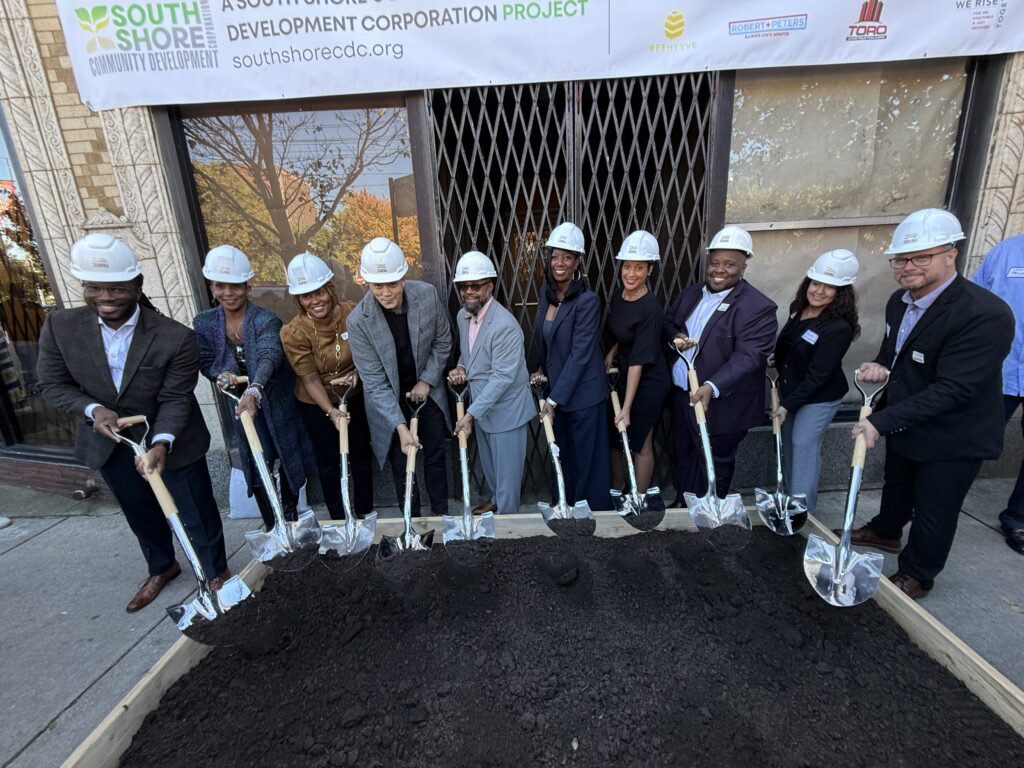
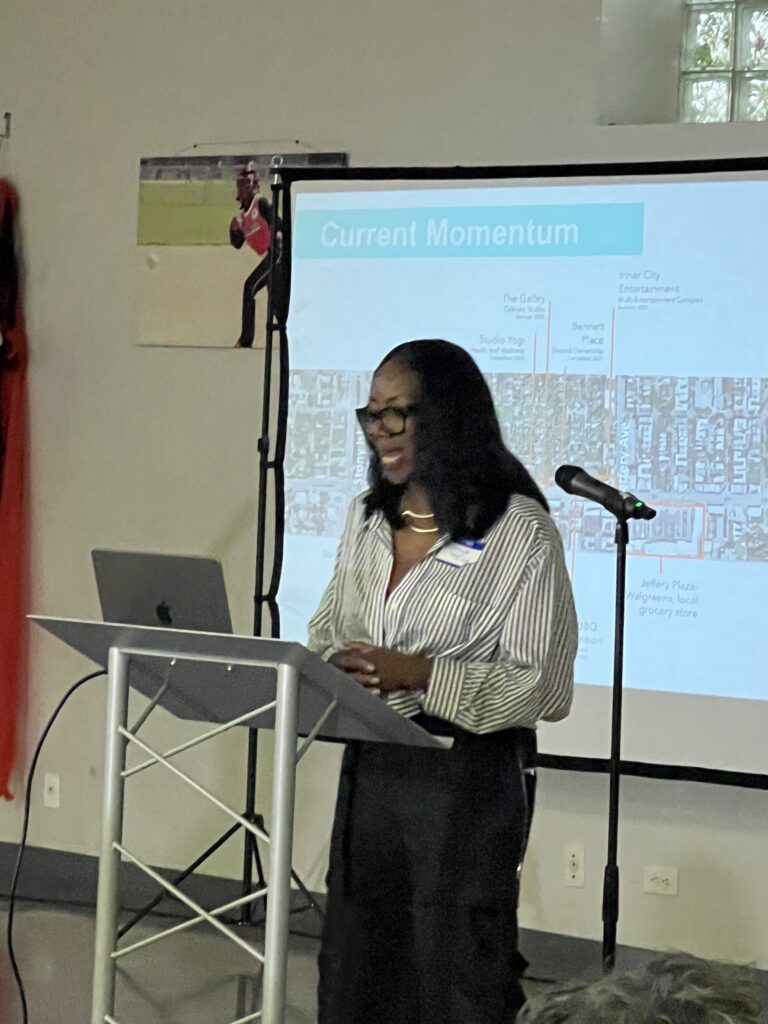
“The strongest communities are those where people of all income levels have a place and a voice.” said Trice, “It’s time for our voices to be heard. For too long, our buying power has been overlooked. South Shore has $1.86 billion dollars of expendable income, of which $845 million leaves our community annually. I envision a South Shore where that retail leakage can be recaptured, creating the community wealth we need to thrive”.
Trice’s efforts also speak to a broader understanding of what revitalization requires. Beyond infrastructure and investment, it demands trust, engagement, and a willingness to listen to the people who know the community best. Trice brings extensive experience in grassroots organizing and small business support, ensuring that development strategies are informed by those who live and work in the neighborhood every day.
That perspective has been critical in shaping initiatives that are both ambitious and grounded. Whether supporting local entrepreneurs, activating commercial corridors, or forging partnerships that bring additional resources into the community, her work reflects a comprehensive approach to economic development—one that recognizes that no single solution can address systemic challenges.
Leadership That Resonates
Trice’s leadership has not gone unnoticed. Her contributions to community development and real estate have been recognized by organizations such as Crain’s Chicago Business, and most recently, she was honored with a Women of Excellence Award from the Chicago Defender. Highlighting the significance of her work not only within South Shore, but across the city.
Still, the focus remains local.
South Shore’s history is one of resilience, shaped by generations of residents who have built, sustained, and advocated for their community despite ongoing challenges. Trice’s work builds on that legacy, creating structures that support long-term stability while opening doors for future growth.
Her academic foundation at Roosevelt University helped shape her understanding of development and community building, but it is her on-the-ground experience that defines her impact. By bridging strategy with community insight, she has positioned herself as both a leader and a collaborator, someone who not only envisions change but works alongside others to bring it to life.
Looking Ahead
Looking ahead, the future of South Shore will likely continue to evolve. As new investments emerge and development opportunities expand, the question will not simply be what changes, but who benefits from those changes.
Through her leadership, Trice is helping to answer that question in a way that prioritizes equity, ownership, and community voice.
In a neighborhood often defined by what it has lacked, her work is a reminder of what is possible when development is approached with intention. Not just revitalization, but restoration. Not just growth, but shared prosperity.
And in South Shore, that distinction makes all the difference.