


I’m not a fan of hospitals. I mean, if I had to choose the ten places, I’d like to spend time at, a hospital would be number 15. On the other hand, a hospital is not a place you opt to go; it’s a place your body tells you, you had better go.
So, about four weeks ago I was with a friend who began experiencing some worrisome symptoms. She couldn’t quite pinpoint what was going on.
Maybe indigestion. Maybe gas. Maybe something was up with her heart. Better safe than sorry. We headed to the UChicago Medicine Emergency Department.
To be perfectly truthful, never in my entire life have I been in an Emergency Department, whether for myself or with someone else, and called it a pleasant experience. This was no exception. It was cold. They’ve got to keep it cold. You know – lots of patients, lots of germs. Of course, you’re immediately triaged so you have the peace of mind of knowing if they don’t rush you to the back after the blood pressure check, the EKG and the blood work, then you’re good to wait it out, Once you get through the Emergency Department, it’s either “you’re fine, go home,” or “come back to the examining room where we can take a closer look.” In my friend’s case it was the latter. “Your EKG was normal,” they told her, “But your bloodwork presented an enzyme that revealed there might be something going on with your heart.” What if they had just relied on the EKG and sent her home? I was impressed. She was in good hands. It wasn’t one doctor, it was a team of the most pleasant, reassuring, competent medical professionals one could hope for.
The team determined that my friend should be admitted for a few more tests and observation.
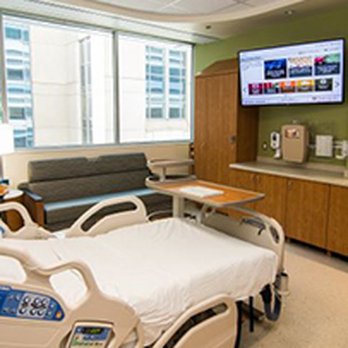
The room they put her in was beautiful and I never thought I’d say that about a hospital room. Now, you know how some hospital rooms have a couple of chairs, two beds, whether both were occupied or not, and one nurse to handle a dozen or so people? Well, this room had one bed and it wasn’t a skinny bed either. By that time her better half had come to the hospital and he and I shared a roomy sofa and watched TV with her. This wasn’t an ordinary hospital TV with three channels, the weather on one, local news on the other and a game show on the third – and sometimes a fourth channel that explained the rules and amenities of the hospital.
This TV had all the channels, however many those were, I didn’t count.
We watched movies, news and yes, even game shows.
When my friend pushed the nurse’s call button, something miraculous happened.
The nurse came – immediately- as if she had been hovering close by waiting to be called. We didn’t have to go out in the hall and yell for a nurse, not once.
When I complimented one of the staff about the hospital, I could tell he was proud.
“Did you see the cancer center?” He asked. He wasn’t the first person to brag about the Cancer Center. Billed as Chicago’s first freestanding cancer pavilion, the 575,000-square-foot facility is designed to provide patients and the community access to the newest diagnostic innovations and leading-edge therapies.
The next morning, and every morning for the four days she was in the hospital, the team of doctors did their rounds, and spoke openly and candidly about what the tests revealed, what medication they were going to prescribe, and what follow-up would be performed by the doctors and by the patient.
Discharge day came – and here’s where it gets even better. Because they wanted to keep her a couple of more days, they decided to do the hospital at home program –a unique program created by UChicago Med for patients who still needed care, but were ready to leave the hospital. She was brought home in a Medi-car. A month’s worth of meals showed up shortly after she was home. These were not the meals on wheels kind of meals – these were hearty, full-course meals. Three meals a day.
They brought a scale. a blood pressure monitor and an iPad. After they left, she decided to take her blood pressure. Note: the blood pressure monitor wasn’t hooked up to anything, nor was the scale which was on the opposite side of the room. I tell you this because after she took her blood pressure, a voice came from the iPad announcing the results, which were received by the hospital at the same time. When she stepped on the scale, the voice announced her weight to the room and the hospital. Nurse Nicole came twice a day – in the morning and the evening to take her vitals. When she was discharged days later, Nurse Nicole brought the discharge papers and provided follow-up instructions. Someone came and picked up the equipment, but not the food.
I’m not looking forward to a hospital stay in the near future, but if it ever comes to that, I’m so glad there’s a state-of-the art hospital right here on the south side of Chicago.