
Chicago’s South Side is not merely a section of the city—it is one of the most consequential Black cultural landscapes in America. Its history is a story of migration and memory, struggle and genius, confinement and creativity. Long before it was reduced to headlines or statistics, the South Side was a place where Black people built institutions, shaped national culture, and fought—daily—for dignity and self-definition.
To understand Chicago, you must understand the South Side.
Between 1916 and 1970, millions of Black Southerners fled racial violence, economic exploitation, and Jim Crow laws in what became known as the Great Migration. Chicago stood out as a destination, promising industrial jobs and the possibility—however limited—of freedom.
Most newcomers settled on the South Side, clustered into a narrow corridor later called the Black Belt. Restrictive covenants and redlining barred Black families from moving freely throughout the city, forcing density and hardship. Yet within these boundaries, something extraordinary happened: a self-sustaining Black urban world took shape.
By the 1920s and 1930s, Bronzeville had become known nationally as the “Black Metropolis.” It was a hub of Black-owned banks, insurance companies, newspapers, nightclubs, churches, and political organizations—an entire ecosystem created in response to exclusion.
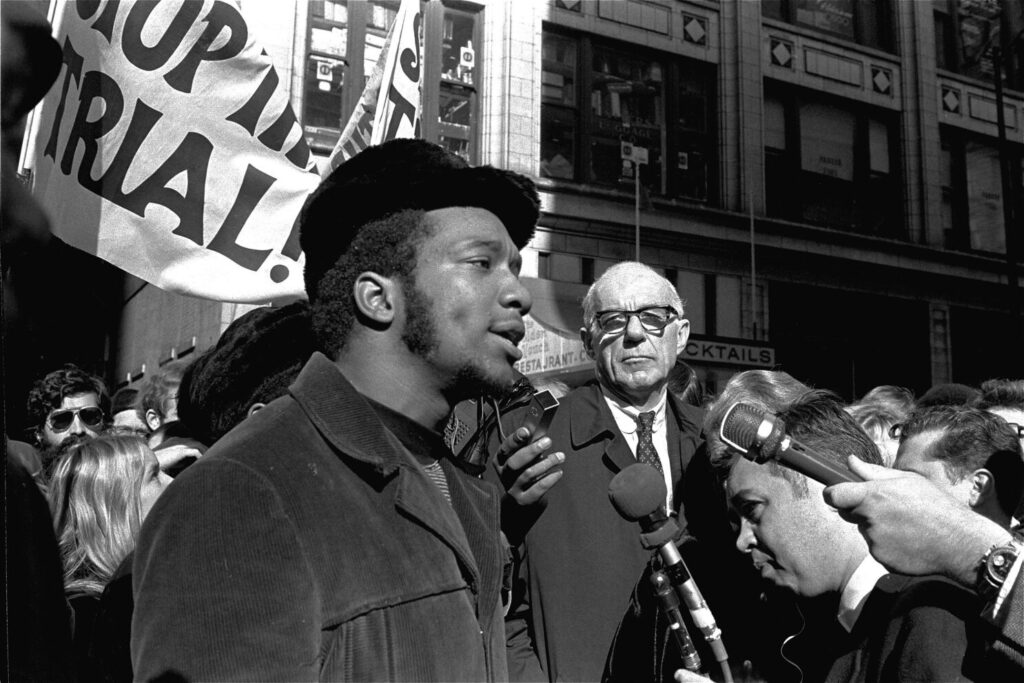
Bronzeville was home to towering figures such as Ida B. Wells and Gwendolyn Brooks, whose work captured the political urgency and everyday poetry of Black life.
Although overt Jim Crow laws ruled the south, segregation had no boundaries. In fact, Dr. Martin Luther King, Jr. famously said Chicago was the most segregated city in the nation. Because of this segregation, Black families that settled on the South Side were confined to Bronzeville and limited sections of Woodlawn and Englewood communities. This changed in the mid-1950s primarily because the 1948 U.S. Supreme Court ruling in Shelley v. Kraemer declared racially restrictive housing covenants unenforceable. This allowed growing, middle-class Black families to escape overcrowded, segregated, and “slum” conditions for better-quality housing, while “blockbusting” tactics by real estate agents pressured white residents to sell and move out. Almost overnight, all-white communities like Chatham and Auburn-Gresham became majority-Black communities/
It took a little longer in affluent communities like South Shore. As African Americans began moving into the South Shore community, the South Shore Commission, a community group formed to manage integration, was formed. The mission of the South Shore Commission was to maintain a 60- 40 ratio of white residents to Blacks. Needless to say, the quota could not be maintained, and South Shore quickly grew into a majority-Black community. Once a predominantly Jewish and white enclave, South Shore emerged as one of the most significant Black middle-class neighborhoods in the city, home to Black professionals—teachers, doctors, postal workers, and small business owners. Despite aggressive blockbusting and predatory real estate practices, South Shore became a symbol of Black perseverance, political organizing, and cultural pride.
Auburn Gresham tells a parallel story of Black aspiration and collective responsibility. Known for its brick bungalows, manicured lawns, and strong civic associations, the neighborhood attracted Black families seeking homeownership and stability. Churches, block clubs, and schools anchored Auburn Gresham’s identity as a community deeply invested in order, dignity, and the next generation.
Chatham rose as one of the South Side’s most enduring symbols of Black middle-class success. With its stately homes, wide streets, and strong neighborhood institutions, Chatham represented economic achievement and generational continuity. It became home to professionals, educators, and political leaders who valued both stability and civic engagement.
Englewood’s history reflects both the promise and the pain of the South Side. Once a thriving commercial and transportation hub, Englewood suffered devastating losses due to deindustrialization, redlining, and disinvestment. Yet it has also been a center of grassroots organizing, faith-based leadership, and community-led revival efforts determined to redefine the neighborhood’s future.
Woodlawn occupies a unique place in South Side history, shaped by proximity to the University of Chicago and waves of displacement tied to urban renewal. Long a site of political organizing and housing activism, Woodlawn residents fought to remain rooted even as development pressures mounted. Today, the neighborhood continues to navigate change while asserting its right to community preservation.
Roseland, located at the far southern edge of the city, has long embodied working-class pride and Black homeownership. Built around industry and rail lines, Roseland nurtured strong labor traditions, churches, and civic life. Despite economic shifts and population loss, residents have remained deeply committed to protecting their neighborhood’s legacy.
As the South Side grew, the city doubled down on segregation. Restrictive housing policies, discriminatory lending, and later the construction of massive public housing developments reinforced racial boundaries.
As the South Side grew, the city doubled down on segregation. Restrictive housing policies, discriminatory lending, and later the construction of massive public housing developments reinforced racial boundaries.
The South Side became a nerve center of Black political resistance. Organizers challenged not only Southern racism but Northern segregation and police violence. This legacy culminated in 1983 with the election of Harold Washington, Chicago’s first Black mayor.
Late 20th-century disinvestment devastated many South Side neighborhoods, but decline is not the full story. Across South Shore, Auburn Gresham, Chatham, Englewood, Woodlawn, and Roseland, residents continue to fight for reinvestment without displacement.
Community organizations, artists, faith leaders, and longtime homeowners remain the backbone of these neighborhoods, reclaiming commercial corridors, preserving historic housing stock, and insisting on a future rooted
in dignity.
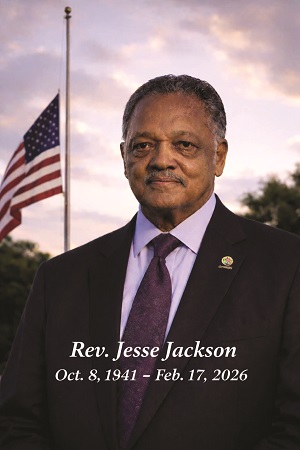
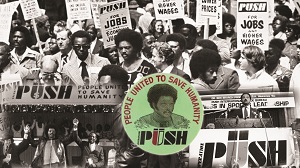
The South Side of Chicago is home to the Reverend Jesse Louis Jackson, Sr., founder of Operation PUSH and Haki Madhubuti, activist, poet, author, publisher and founder of the Third World Press, author and editor of Ebony Magazine, Lerone Bennett, Gospel singer, Mahalia Jackson as well as Professor Thomas Dorsey, known as the Father of Gospel, the Reverend Jeremiah Wright, Pastor emeritus Trinity United Church of Christ, President Barack Obama and First Lady Michelle Obama, singer Jennifer Hudson and rapper, Common, Composers Ramsey Lewis and Charles Stepney, Mayor Harold Washington, Poet Useni Eugene Perkins, The Honorable Elijah Muhammad, founder of the Nation of Islam, settled in Chicago, Minister Louis Farrakhan. Basketball great Derrick Rose, Actor/Comedian Bernie Mac, Producer Oprah Winfrey, Author, Gwendolyn Brooks, Director, Ruben Cannon, Activist/Journalist Ida B. Welles, Boxer Muhammad Ali, Maurice White, Philip Bailey and other members of Earth, Wind and Fire; Marshall Thompson of the Chi Lites, Quincy Jones, Herbie Hancock, Chaka Khan, Lou Rawls, the Staple Singers, the Emotions, Richard Wright, Bessie Coleman, Jazz Musicians Jack DeJohnette and Ahmad Jamal, singers/musicians Curtis Mayfield, Sam Cooke and Jerry Butler as well as Rapper Kanye West and countless other past and present Chicago South Siders.
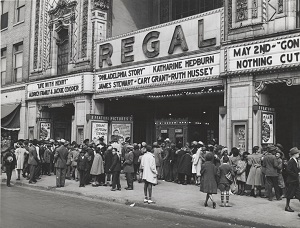
Yesterday’s Chicago South Side was famous for its great entertainment venues, the Regal Theater, the Tivoli theater, Badland, Alexander’s Steak House, the Tiger Lounge, Flukies Lounge, the Metropolitan Theater, the Sutherland Hotel’s famous New York Room, the Trianon and Grand Ballrooms, Club De Lisa, Theresa’s Lounge, and many more. Today, the South Side still flourishes with a host of restaurants, nightclubs, and entertainment venues, including Norman’s Bistro, Room 43, The Quarry Event Center, the Bronzeville Winery, the South Shore Cultural Center and a whole bunch more.
The Black history of Chicago’s South Side is American history. It reveals how Black communities created opportunity under constraint, transformed culture under pressure, and insisted on democracy in a city—and a nation—that often denied it.
Historically Black communities in cities as Harlem, New York; Watts, Los Angeles; Oakland, California, and others have given way to gentrification.
But not the South Side of Chicago. The South Side endures—not because it was spared harm, but because its people never surrendered their voice.