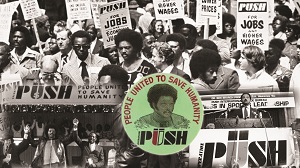

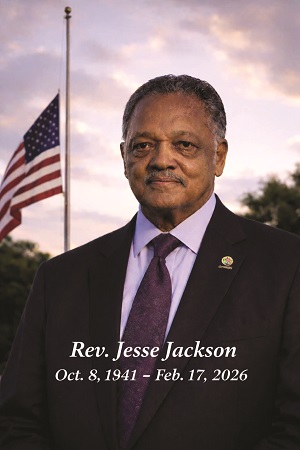
The first album I ever received was Run Jesse Run by the Sugar Hill Gang — a record that captured, in its own way, how Rev. Jesse Jackson had become something larger than politics. He was culture. Rap was still being dismissed as a fad by the gatekeepers of mainstream taste, but Jesse was already institutional. Already marching. Already negotiating. Already turning protest into contracts. Already insisting that dignity had an economic ledger.
Long before equity became a watchword, Jesse Jackson was operationalizing it — not as theory, not as slogans, but as negotiated outcomes.
Operation Breadbasket was more than a campaign. It was an economic doctrine. Under Jackson’s leadership, the strategy was both simple and radical: if corporations profited from Black communities, they bore a moral obligation to hire, invest, and contract within those communities. This was not charity. It was redistribution through leverage — organized accountability, economic theology in motion. My great-grandfather, Paul Clay, received commercial garbage disposal contracts in the late 1960s as a result of the doors Operation Breadbasket opened up. That contract was the tangible proof of civil rights evolving into economic rights: jobs, ownership, the circulation of wealth, the infrastructure of dignity.
Jesse Jackson understood something many activists did not — that political access without economic access is only symbolic progress.
He negotiated with corporations not merely for representation, but for reinvestment. Grocery chains, banks, distributors, manufacturers — all faced organized pressure to convert their presence in Black communities into genuine partnership. That strategy seeded Black business growth in ways mainstream history has still failed to fully document.
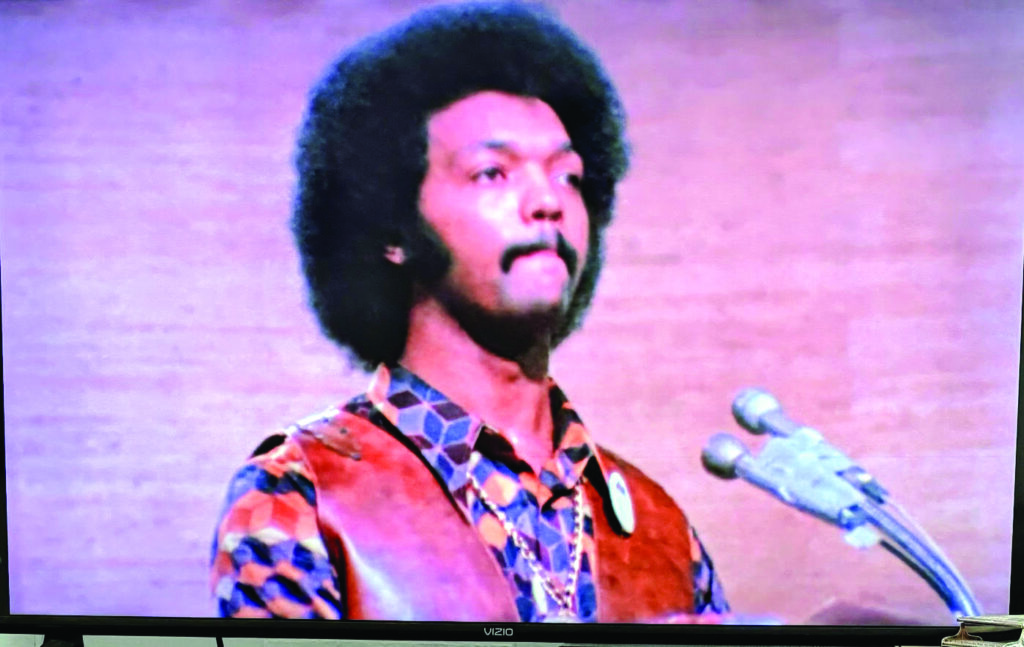
Then, decades later, the image shifts: a wheelchair, being pushed into meetings at PUSH headquarters. The body aging, but the institution still moving. That image is profoundly American — a civil rights general who never left the battlefield of justice, even as time demanded a slower pace.
Jackson was frequently labeled a “civil rights leader,” but that phrase is almost too small. It flattens him into protest imagery when his real battleground was the negotiation table — corporate boardrooms, international diplomacy corridors, the machinery of power itself.
He was a translator of power.
He could stand before thousands chanting “I Am Somebody” and then walk directly into a meeting with CEOs or heads of state — without losing cadence, conviction, or cultural grounding. Kipling’s lines come to mind: “If you can talk with crowds and keep your virtue, / Or walk with kings — nor lose the common touch”— not as poetic exaggeration, but as biography.
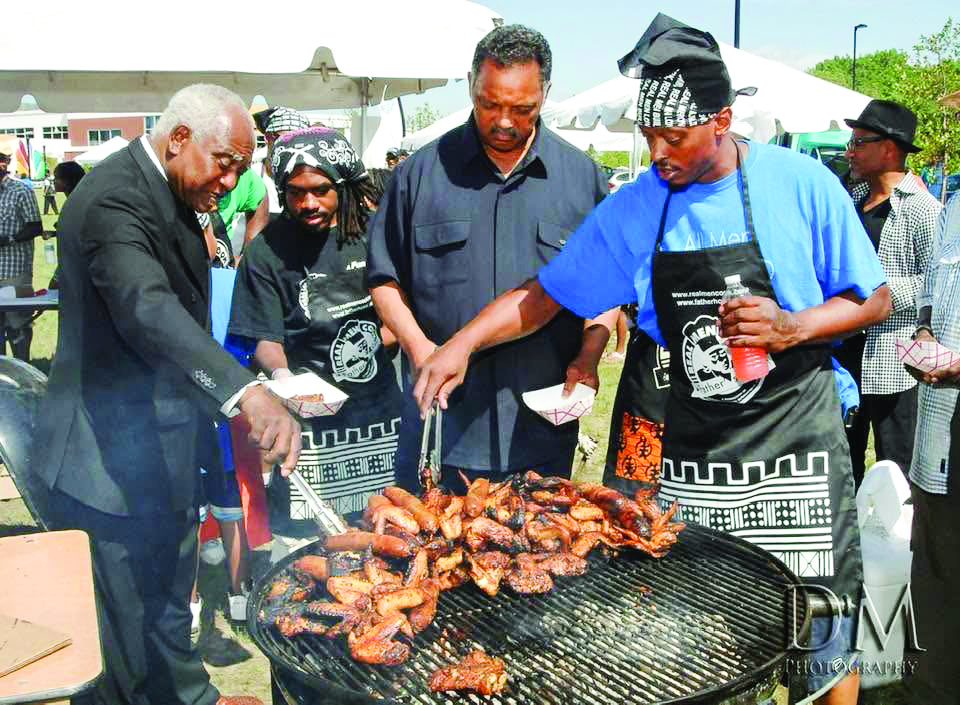
Jackson embodied accessibility, not performatively, but structurally. PUSH headquarters was not a distant monument. It was a revolving door of community: clergy, entrepreneurs, organizers, and ordinary citizens seeking intervention, guidance, or advocacy. You could see him with his sons on Father’s Day at Real Men Cook. He understood optics and economics as twin instruments of the same purpose.
His presidential campaigns of 1984 and 1988 were never simply about winning office. They were about expanding the electorate, reshaping coalition politics, and forcing the Democratic Party to acknowledge the constituencies it had long taken for granted. The Rainbow Coalition was not branding — it was a strategic realignment that fused labor, Black voters, Latinos, farmers, and progressives under a shared moral-economic framework.
His legacy is not unblemished, and it should not be sanitized.
The boycott of Barbershop in the early 2000s exposed a generational fault line: the evolving cultural language of younger Black creatives colliding with the moral guardianship of an older civil rights tradition. Jackson was operating through a lens shaped by the politics of representation under segregation, while hip-hop and Black cinema were working from a lens of satire, irreverence, and post-integration identity.
The clash was inevitable, and in some ways necessary.
Similarly, the hot mic moment involving Barack Obama revealed not merely controversy, but generational displacement. Jackson belonged to a lineage forged in marches, arrests, and hard-won concessions. Obama represented a different archetype — institutional ascension within existing structures rather than external pressure upon them. That transition was historically complex, emotionally layered, and politically symbolic.
Yet even in those moments, his underlying impulse was moral guardianship — to be the conscience, the interrupter, the elder voice reminding a community of its ethical roots.
Jackson’s leadership style was sermonic, strategic, and economic all at once. He never separated spirituality from policy. His speeches carried the rhythm of the Black church and the logic of a seasoned economic strategist. “Keep Hope Alive” was not mere rhetoric — it was psychological infrastructure for communities navigating systemic exclusion.
Hope, in Jackson’s usage, was not passive optimism. It was organized resilience.
When he declared “I Am Somebody,” he was counter-programming centuries of dehumanization. That phrase moved into classrooms, community centers, and living rooms as a cultural affirmation ritual. Children recited it. Adults internalized it. Institutions adopted it. Language became empowerment technology.
The South Shore neighborhood, the broader South Side, and Chicago itself are inseparable from Jackson’s footprint. The same civic ecosystem that produced global figures also produced the localized economic interventions that shaped family trajectories — like my great-grandfather’s contract. That is the under-told story: macro leadership creating micro opportunity, one negotiation at a time.
Critics often reduce Jesse Jackson to soundbites, controversies, or failed presidential runs. But his long game was institution-building. PUSH, Operation Breadbasket, Rainbow/PUSH Coalition — these were not moments. They were mechanisms.
And mechanisms outlive headlines.
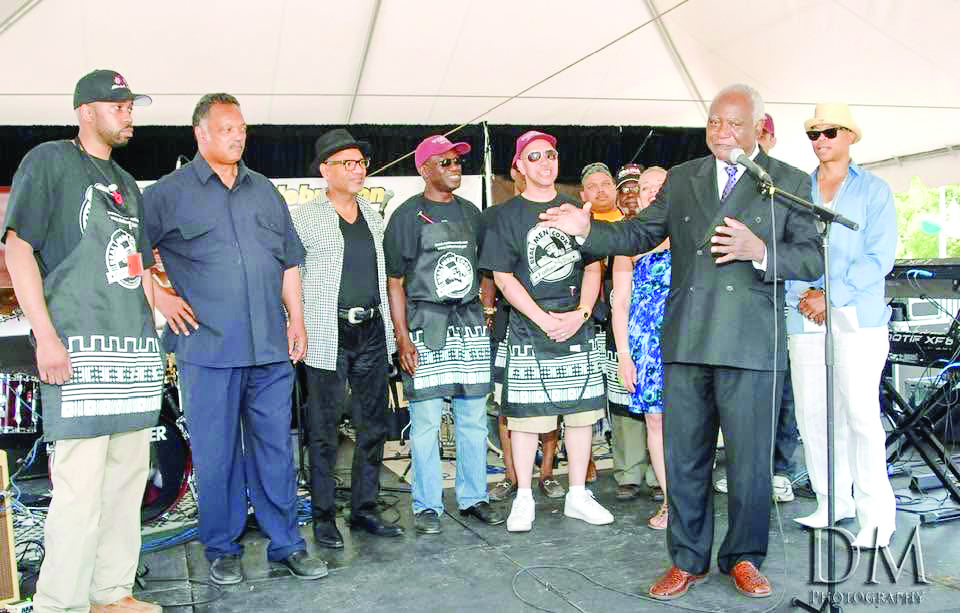
Even his physical decline in later years did not erase symbolic authority. Being wheeled into meetings is not weakness in that context. It is continuity. It is a living archive entering the room. It is history refusing to retire.
Because that is ultimately Jesse Jackson’s deepest legacy: not perfection, not unanimity, not generational alignment — but psychological empowerment paired with economic advocacy.
He reminded people they mattered. Then he fought to make systems treat them accordingly.
In an era when civil rights language is too often diluted into hashtags and corporate messaging, Jackson’s model was materially grounded. Contracts. Jobs. Negotiations. Access. Investment. Accountability.
He was not just marching for rights. He was bargaining for equity.
And for those who grew up watching him — from tuxedos to wheelchairs, from rallies to PUSH meetings — Jesse Jackson was never merely a historical figure.
He was a presence. A voice woven into the background of Black life. A negotiator of dignity. A conscience in motion.
“So Keep Hope Alive — because I AM Somebody!”