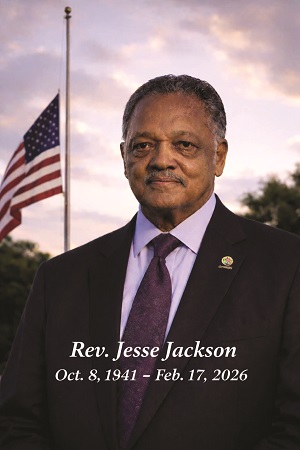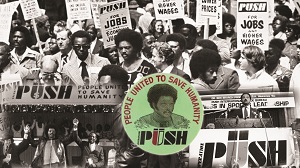

Jesse Jackson’s low profile these days may have dulled our memories of the enormous shadow he once cast on American politics and civic life. And that’s not even including his former status as the nation’s apex civil rights activist. Jackson’s political influence was absolutely unprecedented, particularly between 1983 and 1988, when he twice campaigned for the presidency.
In 1983, after many seasons of civil rights activism, Jackson audaciously vaulted into the Democratic primaries for the 1984 presidential campaign. Moreover, he flouted political protocol by jumping into the race without the backing of Black leadership and established party elders, who likely would have preferred a less volatile candidate with more extensive political credentials.
However, the fiery campaign of this assertive civil rights leader ushered in a whole new crop of Black political aspirants and operatives. What’s more, his sudden political visibility required unique coverage; editors needed a knowledgeable take on this brash, Black candidate and they took affirmative action to get it.
Thus, many Black reporters got a shot at presidential coverage for the first time. This breakthrough not only diversified the press corps but also highlighted the systemic barriers that had previously excluded Black journalists from such high-profile assignments. Jackson’s campaign became a catalyst for change, inspiring future generations of Black leaders and journalists alike.
Mediagenic and quick-witted, Jackson seldom failed to provide the appropriate soundbite. His ability to deliver sharp, memorable quotes made him a favorite among journalists and helped ensure that his campaign received extensive media attention. This visibility not only amplified his message but also solidified his status as a member of the Black leadership pantheon.
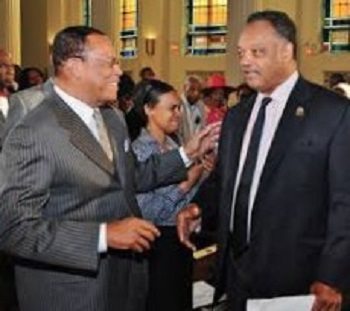
However, there is one aspect of Jackson’s political ascendency that often goes remarkably unnoticed, and that is his unprecedented alliance with the Nation of Islam. That break of precedent went both ways; the NOI’s endorsement of Jackson’s presidential campaign was the first time the group has officially joined the electoral fray. Jackson’s embrace of the NOI, which is helmed by the charismatic Louis Farrakhan, was a move that has been underemphasized for its historical significance. Jackson’s alliance bridged many gaps, including one between Muslims and Christians, and an ideological one between integrationists and Black nationalists.
To note that Jackson’s ecumenicalism may have been prompted by threats from the Jewish Defense League (JDL), which at the time was chanting things like: “who do you want, Jesse Jackson; how do you want him? … dead,” is not to devalue his efforts.
Although it certainly didn’t hurt to have the FOI as protective escorts during many of his press junkets.
The JDL’s death chants were, in part, a reaction to press leaks that Jackson jokingly referred to New York City as “hymie-town” during an “off-the-record” conversation with Milton Coleman, a Black Washington Post reporter. This, of course, lit a fuse in NYC, always attuned to any hint of anti-Jewish sentiment, and Jackson was widely condemned as an anti-Semite in America’s media capital.
Coleman’s absence of journalistic ethics (reporters often conduct “off-the-record” interviews to get at thorny truths that add perspective to the story but remain anonymous) was strongly excoriated in the Black community, though he was promoted by the Post soon thereafter.
Farrakhan, too, profited from the alliance. Although well-known in the NYC metro, where he had served as minister of the NOI’s Harlem Temple No. 7 soon after the 1965 assassination of Malcolm X, he was not well-known in Chicago. His hook-up with Jesse changed that. In taking that political leap Farrakhan made sure to cite the Hon. Elijah Muhammad (hereafter, THEM) as justification. In the Message to the Blackman, the definitive book on NOI dogma, THEM writes,” … if our politicians are to serve us, they must have no fear of the white man when they plead our case… “ And when they come along, THEM continued, “we must give good black politicians the total backing of our population.”
All in all, their alliance almost seemed destined; Farrakhan is the heir of Malcolm X –and the nationalist strain of Black politics — in almost the same way that Jackson is the heir of Martin Luther King, Jr. and the civil rights, integrationist strain. Their symmetrical alliance had tremendous symbolic value. Plus, Jackson needed a crusade to fuel his campaign, and what better way to start one than to heal the rift between Black nationalist and civil righters?
This hybridity is an aspect of the Jackson mystique often overlooked, or underplayed by prominent pundits. Perhaps that shouldn’t be surprising, much that happens in Black America is imperceivable to many of them. When they peruse the Black community, most seem on the lookout for the blunt stereotypes shaped by bigoted expectations rather than the nuanced behavioral subtleties that are apparent in other communities. Often, they miss those fine-points that distinguish truths from racist truisms.
Jesse Jackson’s genius lay in his ability to bridge divides that traditionally have hampered Black progress. The way he blended the fiery rhetoric of Black nationalism with the pragmatic goals of civil rights advocacy not only amplified his appeal but also underscored the complexity of his leadership.