
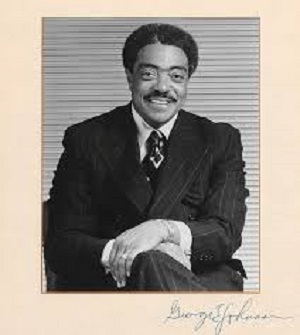
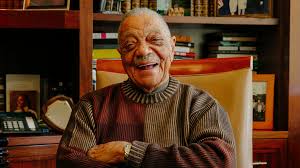
On Saturday, November 8, George E. Johnson, Sr, founder of Johnson Products Company, will receive the Edwin “Bill” C. Berry Civil Rights Award because of his trail-blazing work in Black entrepreneurship, media, and empowerment–building a major African American owned business, advance Black economic ownership and giving back to the Chicago community.
George Johnson was a central figure in the Black hair revolution that began in the 1960’s.
Back in the day, as Black women struggled with their hair, a radio commercial would remind us that our hair was our crowning glory. Women took that to heart, and bought the only two hair products available to groom their “crowning glories” – Royal Crown and Dixie Peach Hair Pomade. Many of you reading this are too young to have known about these products, but there were a lot of women using them and walking around with very greasy hair because the makers of those products knew absolutely nothing about Black hair.
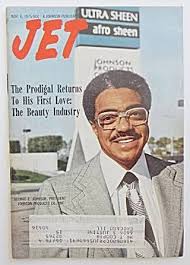
Then came George Johnson.
In 1944, a young George Johnson was running for S.B. Fuller, a Black-owned cosmetics company. Johnson saw that the only two products being sold for Black hair were manufactured by non-Black companies. He began talking to a chemist at the S.B. Fuller Company, who impressed by George’s interest in developing a product especially for Black women, encouraged George to leave the company and start out on his own. He had a loan of $500 that had been earmarked as a vacation loan, but he took that money to start his own company, Johnson Products.
Women were hungry for a product for their hair, and his Ultra Sheen product gave their hair the kind of care it needed. Before that, hair care product manufacturers would put their products on the shelves of drug stores, but that was all. No follow-up with the beauticians. George Johnson introduced the idea of training cosmetologists on the proper way, not only to apply his product, but to care for their clients’ hair.
Johnson’s interest in the Black community went beyond women’s hair. In 1964, he and Alvin Boutte and several other Black businessmen co-founded the Independence Bank on Chicago’s South Side.
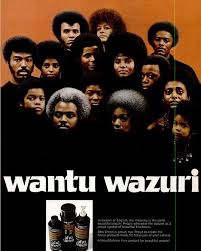
In the 1960’s, a young man named Don Cornelius had an idea. After watching American Bandstand, he decided he wanted to produce a Black version of a dance show for Black teens. He named it “Soul Train.” Back then, the only advertising agencies with major accounts that advertised on TV were white-owned. George Johnson not only helped Don Cornelius’s Soul Train become an overnight hit by being the program’s exclusive sponsor, but he also became a dedicated client Vince Cullers, a Black-owned agency and one of the first to target his advertising to Black people – specifically Black women.
There was a cultural revolution happening in the Black community around that time. A young man by the name of Malcolm X had gotten the attention of young people who became proud of their race. Then Stokely Carmichael came along telling people that “Black is Beautiful.” Singer James Brown got in on the action and had everyone singing, “Say it Loud! I’m Black and I’m proud.” And women had a brand-new hairstyle, which some say was inspired by militant activist Angela Davis. Both men and women were wearing their hair in its natural state. Prior to that, women were straightening their hair, either with a hot comb, called the straightening comb, or with relaxers, which chemically straightened hair using lye as the main ingredient. Women were deathly afraid of getting their straightened hair wet which would cause it to go back to its natural state, better known as “nappy” or “kinky.”
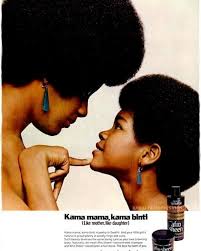
Now women, especially young women, put away the straightening combs and the relaxers and proudly sported their afros for all the world to see. The afro was more than a hairstyle; it was a symbol of pride, signifying that the wearer embraced her Blackness. Johnson recognized this trend and created Afro Sheen hairspray – a product that gave afro’s a beautiful sheen, without looking or feeling greasy.
Vince Cullers created advertising for Afro Sheen that embraced the cultural revolution. His ads and TV commercials featured beautiful Black women wearing beautiful afro hairstyles. In the television commercial, as the woman modeled her fro a singer in the background would sing “Wantu Wazuri – beautiful people use Afro Sheen.”
Johnson Products revolutionized the Black hair care industry, and other Black- owned manufacturing companies followed suit. When Edwin “Bill” C. Berry retired as the Executive Director of the Chicago Urban League in 1969, George Johnson couldn’t wait to scoop him up as Special Assistant to Johnson Products where he served as its “face in the community” speechwriter and goodwill ambassador for the company.
If anyone deserves the Chicago Urban League’s award, it is George E. Johnson, Sr., for his giving spirit, love of community, and helping millions of women to show their hair really is their crowning glory.