

Editor’s Note: Recently, the Washington Post Dec 15, published an article with a headline asserting that “Chicago has lost its mind.” Writer Floyd Webb recognized that as a claim offered as shorthand for the city’s fiscal and political challenges under Mayor Brandon Johnson. This article, by Floyd Webb, is a response to the Washington Post:
Rather than engage Chicago’s long structural history—decades of disinvestment, privatization, segregation, and federal retreat—the headline substitutes provocation for analysis, framing democratic choice as irrationality. What follows is not a defense of any individual politician, nor a denial of the city’s real challenges. It is a rebuttal to a narrative habit: the recurring impulse to treat Chicago voters as a problem to be corrected whenever they choose leaders shaped by organizing, labor, and reform rather than elite consensus. This piece argues that what is being misread as disorder is, in fact, a coherent political logic—one rooted in memory, coalition, and what Antonio Gramsci called good sense.
What follows is that rebuttal.
Chicago has a way of not sending anyone unless someone already sent them. Not donors. Not editorial boards. Not national media. The ground sends them first.
Brandon Johnson was that kind of candidate-sent, not manufactured. He didn’t arrive with the familiar sheen of a Chicago politician polished for television. He wasn’t flashy. He wasn’t omnipresent on the cocktail circuit. He was visible in a different register: as a serious organizer on the West Side. And that mattered. Chicago’s Black political leadership has long been South Side–centered, leaving West Side organizers routinely overlooked despite doing some of the city’s hardest, most sustained work.
If you were involved with Black Workers Matter, or organizing around young
Black workers in West Side factories and public-sector jobs, you already knew Brandon Johnson. If there was a strike, he was there. If there was a bargaining session that ran late into the night, he stayed. During the Chicago Teachers Union strikes—2012 and 2019—Johnson wasn’t a commentator. He was part of the connective tissue linking teachers to parents, neighborhoods, and broader labor coalitions.
Johnson’s victory was not a rejection of logic, but a demonstration of a form of political power—narrative power rooted in organization—that elite institutions are structurally blind to.
Which is why his primary victory shocked so many insiders. He defeated a former mayor backed by name recognition, donor networks, and the residual machinery of Chicago politics. The surprise wasn’t Johnson’s strength. It was the media’s inability to recognize organizing as power.
Chicago sends people the polls don’t see coming.
What Johnson Offered—and What He Didn’t
What Brandon Johnson offered—what Lori Lightfoot and Paul Vallas could not—was a political life formed before City Hall.
Lightfoot arrived as a reform-minded attorney, fluent in law and governance, but governing from a prosecutorial and managerial posture. Authority flowed downward. Labor, teachers, and community organizations were often treated as obstacles to be managed rather than partners to govern with. The rupture between her administration and the CTU wasn’t merely ideological—it was structural.
Paul Vallas represents a different Chicago tradition altogether: the perpetual “fixer,” appointed rather than elected, moving from city to city as a crisis manager fluent in privatization, austerity, and charterization. His credentials are institutional, not communal. His accountability has always pointed upward—to boards, donors, and consultants—rather than outward to neighborhoods. Chicago voters have now rejected this model repeatedly.
Johnson’s bona fides were harder to caricature because they were collective. He came from labor not as a brand but as a discipline—bargaining, turnout, coalition maintenance, mutual accountability.
This is power earned in meeting halls, not green rooms.
This is not to say Johnson’s governance has been without friction or misstep. The tension between the slow, consensus-building instincts of an organizer and the urgent, decisive demands of the mayor’s office is real. His challenges managing the migrant crisis or navigating structural budget constraints are not merely inventions of his critics. But the dominant framework used to critique him—the reflexive dismissal of his political lineage as “radical,” “naïve,” or “unserious”—refuses to engage that tension honestly. It simply denies the legitimacy of the political formation that produced him.
Why National Media Keeps Missing the Point.
There is a useful comparison here to Zohran Mamdani in New York. Mamdani’s digital fluency and rhetorical flair make him legible to national progressives as a rising figure. Johnson’s quieter, local fluency does not. Yet both represent the same political phenomenon: candidates whose authority is earned not through donor pipelines or consultant-driven polling, but through tenant meetings, picket lines, and coalition rooms.
National media, adept at covering personalities and polls, lacks the vocabulary to describe this form of political power until it disrupts an election. When journalists cannot explain how someone won, they often conclude they shouldn’t have.
Chicago has seen this misreading before.
The Kim Foxx Precedent
Before Brandon Johnson, there was Kim Foxx.
One of the most consequential reforms Foxx championed—and was relentlessly attacked for—was ending cash bail. What critics missed, or refused to acknowledge, was its simplicity and scope. Cash bail was not a Chicago issue. It was a statewide poverty jail.
Before reform, Illinois held tens of thousands of people in pretrial detention each year solely because they could not afford bond—people legally presumed innocent. Poor white defendants across downstate Illinois were trapped by the same system as poor Black defendants in Cook County. Women were especially harmed, disproportionately jailed for low-level, nonviolent offenses tied to poverty, caregiving disruption, or survival economies—losing jobs, housing, and even custody before ever seeing a trial.
Ending cash bail didn’t privilege one group. It exposed a class system hiding behind the language of law and order. Foxx didn’t weaken justice. She revealed how unjust the system already was. The same narrative apparatus that failed to understand Foxx’s coalition has simply recalibrated its target.
The Scolding Machine
The Washington Post headline declaring that “Chicago has lost its mind” is not analysis—it is performance. It belongs to a familiar genre in which national outlets parachute into the city to administer a moral lecture that substitutes for structural analysis, collapsing decades of disinvestment, segregation, and federal retreat into a single mayoral failure.
What gives this performance local traction is an ecosystem that has been refining the same argument for years: the Illinois Policy Institute. Its function is consistent—produce crisis narratives, launder them through media channels, and reintroduce Paul Vallas as the reasonable alternative, regardless of how many times voters reject him.
This pattern is documented in the publicly available record: over multiple election cycles, Illinois Policy Institute reports on pensions, public-sector unions, and education—circulated through outlets such as the Chicago Tribune, Crain’s Chicago Business, and national media—have repeatedly converged with Paul Vallas’s campaign rhetoric and media appearances, forming a self-reinforcing loop of policy papers, op-eds, and “expert” commentary that persists despite voters rejecting the agenda at the ballot box.
This same apparatus targeted Kim Foxx. It failed. And rather than interrogate why, it has returned to the same playbook with Brandon Johnson.
Narrative Power vs. Democratic Choice.
This cycle of delegitimization exposes a deeper conflict.
Narratives are produced at scale—by think tanks, amplified by national media, and circulated through strained local outlets until they sound like common sense. But democracy does not operate on repetition. It operates on consequence. People vote from where they live, work, organize, and survive.
Antonio Gramsci called this distinction the difference between common sense and good sense—the latter being the lived intelligence that emerges from experience and struggle (Prison Notebooks). What passes for common sense is often the projection of empire: the assumptions of those with power, repeated until they feel natural. Good sense is the voice of people seeking change.
Chicago has not lost its mind.
It has kept its memory—from West Side organizing rooms to union halls.
It has kept its nerve—against the scolding of think tanks and the glare of headlines.
What looks like chaos to institutions blind to its logic is, for Chicago, simply good sense.
Chicago didn’t reject common sense. It chose good sense.
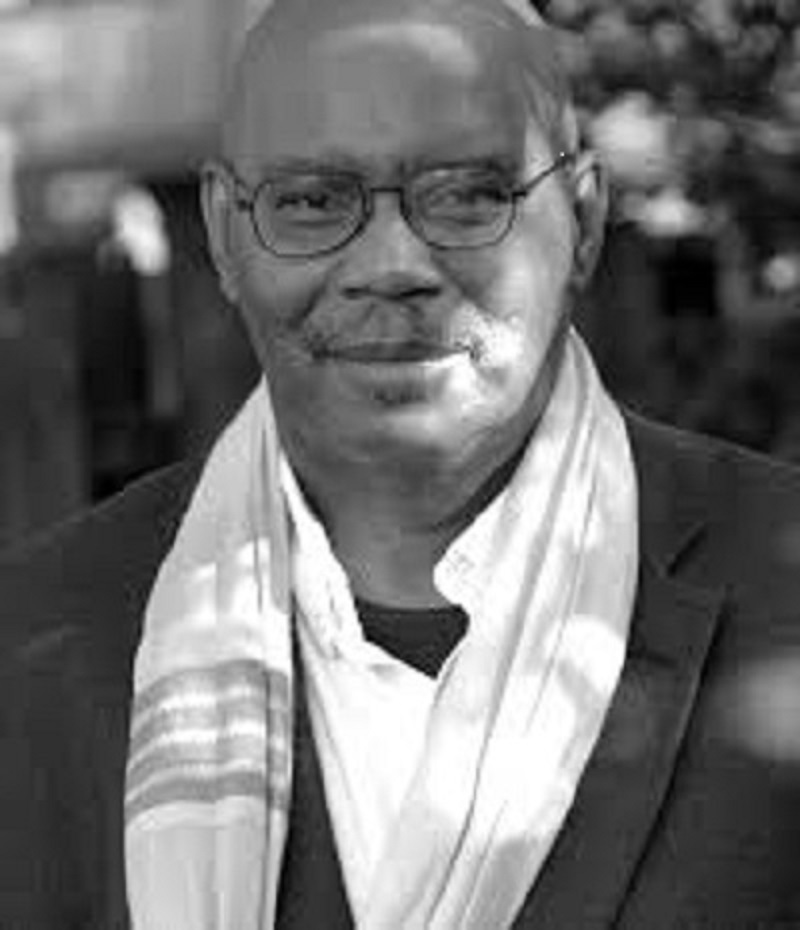
Floyd Webb is a writer, photographer and filmmaker. You can find his published works on Substack.com,