

I’m about to lose my…
We all are.
But this is not about the absolute craziness that has challenged common sense and changed our lives. This is about how one woman turned on a light, illuminating the contributions and talents of the historically excluded.
Erasure, whether intentional or not, shows up in quiet ways. It looks like important Black history that was once captured in physical books, now out of print and hard to access. It looks like news articles that once captured the stories of significant contributors to Black culture, now buried deep in internet archives, or edited away from the writer’s original intent. It looks like oral histories that lived in the voices of elders who are no longer here to tell them. We still have libraries and museums, but even these institutions feel precarious in light of political agendas and shifting funding.
Today, we are starved for remembrance and connection. Remembrance of what came before as a reminder of what is possible now. In the aftermath of Post-COVID 2020, there emerged a hunger for real-life connections with our communities. Not digital proximity, likes, hearts, and swipes, but real, physical presence.
Yvonne Welbon gave the Chicago community and the film industry both remembrance and connection.
In 1991, when Yvonne Welbon began film school, she could name just one African American woman director: Julie Dash. Imagine sitting in a film studies program and not seeing yourself reflected. Imagine loving cinema and realizing the syllabus has little to say about women who look like you.
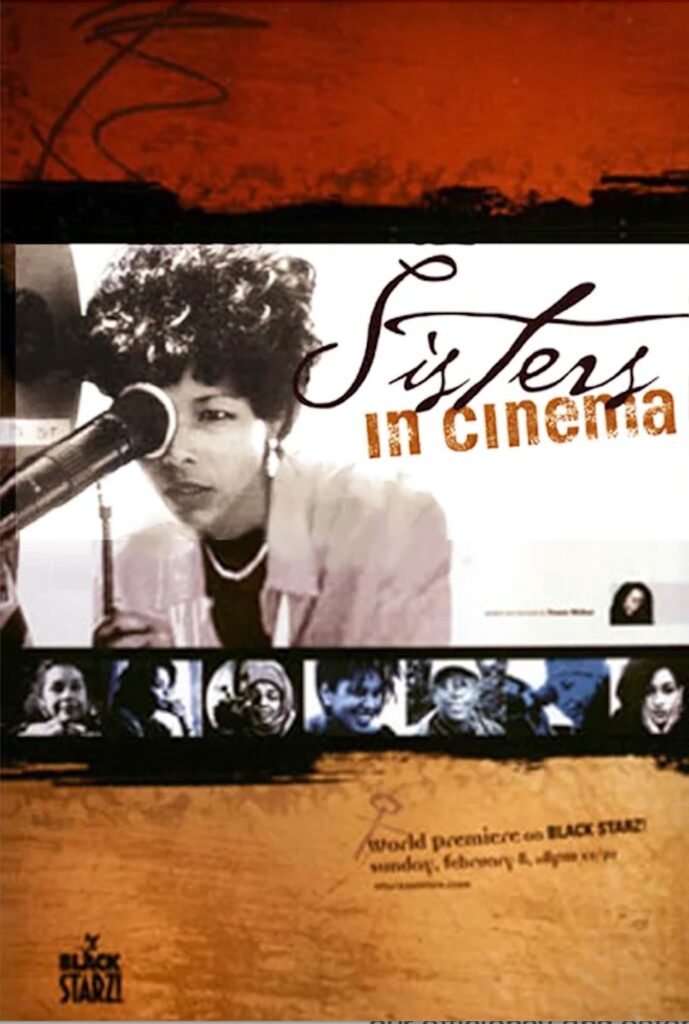
What started as curiosity eventually became research, and that research became a database. In 1997, she launched Sisters in Cinema as an online archive of African American women filmmakers. Over more than two decades, that research grew into one of the largest single collections of African American women’s media production in the United States.
In 2014, Sisters in Cinema became a 501(c)(3) nonprofit in Illinois, with a mission to entertain, educate, develop, and celebrate Black girls and women media-makers and their audiences. In 2017, the organization received a Neighborhood Opportunity Fund matching grant from the City of Chicago,
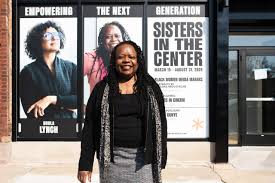
which would eventually support the rehabilitation and development of a Media Arts Center in the South Shore neighborhood on Chicago’s South Side. In March 2024, just over thirty years after Yvonne’s first search for women in film who looked like her, the Sisters in Cinema Media Arts Center opened its doors.
The first time I (Patrice) visited the center, I felt the weight of that legacy immediately. Pulling up to 75th Street and stepping out to see full-sized images of Black women in film boldly displayed in the neighborhood was an emotional experience. It was a visual declaration: they have always been here and will not be overlooked. The physical space is the embodiment of decades of study, documentation, and care. Yvonne did not wait for someone else to build what was missing. She moved from critique to construction, refusing to let the absence of a record become the erasure of a legacy.
Where you build matters, and Yvonne chose South Shore. Black neighborhoods in Chicago have long been a force in the arts and culture fabric of this country, producing writers, musicians, visual artists, thinkers, and organizers who have shaped national and global conversations. Locating this Media Arts Center in South Shore honors those roots, while expanding who has access to what’s inside.
It creates a physical corridor for mentorship and intergenerational exchange within the film and media industries. It also sends a message to the broader industry that it is worth traveling outside the invisible walls of downtown and into the corridors where culture is actually lived, not simply consumed.
That is what culturally progressive looks like in practice.
It means centering those who have historically been pushed to the margins. It means creating infrastructure, real, physical infrastructure, that supports their growth and holds their history.
Now more than ever, stories told through underrepresented lenses need this exact type of support. Sisters in Cinema offers education and development programs designed to raise visibility, build skill, and strengthen community among Black girls, women, and gender non- conforming media-makers. In a moment when remembrance feels contested and connection feels scattered, that is not a small thing. That is the work.
Yvonne Welbon saw a gap in the archival record and spent a career filling it. Now, the Media Arts Center is a home that cannot be quietly taken out of print. What she built is an answer to erasure. It is permanent, present, and developed exactly where it belongs.
Here’s to peace, pride, and progress for the Black women, femmes, and non-binary filmmakers.
Here’s to Yvonne Welbon, founder and chief creative force behind Sisters in Cinema.
To learn more about the work of Sisters in Cinema, visit www.sistersincinema.org.