


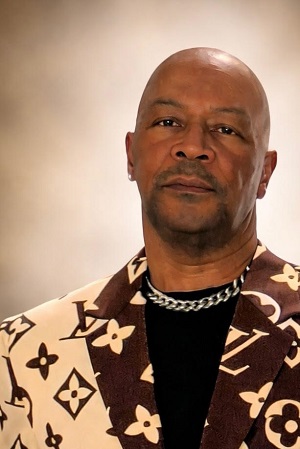
Editor’s Note: The following is part of the Introduction to Chip Eberhart’s upcoming book: “Dark Skin American History.”
So many people misunderstand something about me — and about many families like mine.
I am an American first. Not a hyphen. Not a category. Not a subsection. American — full stop.
I wasn’t born in Africa. There is no country called Africa-America. My roots are here — deep in this soil — going back over 400 years. My family didn’t immigrate to this country. My family was here before this country became the United States of America.
While many Americans today are the children or grandchildren of immigrants from the 1900s, my lineage on this continent predates the founding of the nation itself. Through labor, sacrifice, and service — generation after generation — my family helped build and defend America. That is not a grievance statement. That is a historical fact.
My great-grandfather and his fathers before him were enslaved — forced to build infrastructure and wealth for this nation without compensation, without rest, without dignity under the law. The only day off an enslaved worker received was the day he died. That truth should not divide us — but it must be acknowledged honestly.
And still — service continued.
My grandfather served in the Army Air Corps during World War II and later as a Chicago police officer. My father served in the Air Force during the Vietnam conflict. I took an oath myself — to the Constitution — serving as a police officer.
In my family, that oath is sacred. We don’t say it lightly. We live it. After World War II, America built new suburban communities for returning veterans. One of the most famous was Levittown, built by Levitt and Sons near Staten Island. You could buy a brand-new home — with a new Admiral television— for $7,990. With the GI Bill, a veteran might only need about $400 down.
But here’s the part many people were never taught:
The purchase contracts required buyers to be Caucasian. That restriction was written into the process. Dark skinned American veterans — who wore the same uniform — were denied the same opportunity to buy those homes.
So, while many families built generational wealth through suburban home ownership, darker-skinned American families were locked out — forced into renting — denied equity — denied collateral — and often denied business loans because they lacked that equity.
There are documented cases where dark skinned American entrepreneurs were denied business loans — but approved for personal luxury loans — because lenders assumed advancement was risky, but debt was acceptable.
Education followed the same pattern. Public schools funded by property taxes meant segregated neighborhoods produced segregated and underfunded schools — fewer books, shared materials, weaker facilities. Not by accident — by structure.
By the 1960s, dark-skinned Americans were not asking for special treatment — they were demanding equal treatment under the Constitution.
Let me say something clearly:
Skin color is a physical trait — nothing more. It is not merit. It is not character. It is not intelligence. It is not worth. It is simply biology.
The color of my skin has nothing to do with my ability to learn, lead, serve, build, love, or contribute.
What defines an American is not pigmentation — it is participation. Contribution.
Responsibility. Respect for the Constitution and the rule of law.
And here’s where we move forward — together.
We teach full history — not partial history — so we understand cause and effect.
We anchor unity in constitutional principles — equal protection applied neutrally.
We expand opportunity — ownership, entrepreneurship, skilled trades — for everyone.
We strengthen civic education — so every citizen knows both rights and duties.
We reward service — to community and country.
And we speak the language of shared citizenship — not permanent division.
Truth does not weaken unity. Truth strengthens it.
We are not separate stories.
We are one American story — still being written — together
Historical Wealth Context:
A Levittown home purchased around 1950 for ~$400 with GI Bill support often grew to $300K–$500K+ in value — creating generational equity. Many dark- skinned American veterans were excluded from those purchases and forced into renting, where payments built no family wealth.
About the Author:
Chip Eberhart — filmmaker, music producer, and former law enforcement officer focused on constitutional principles, American history, and unity through truth.