

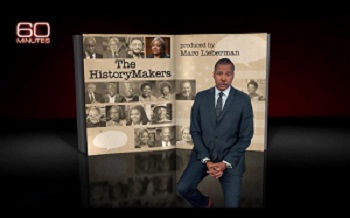
“In society today, what is being debated: who has value and who doesn’t. You preserve what has value. You throw away what doesn’t. That’s why the preservation is so critical. “Julieanna Richardson.
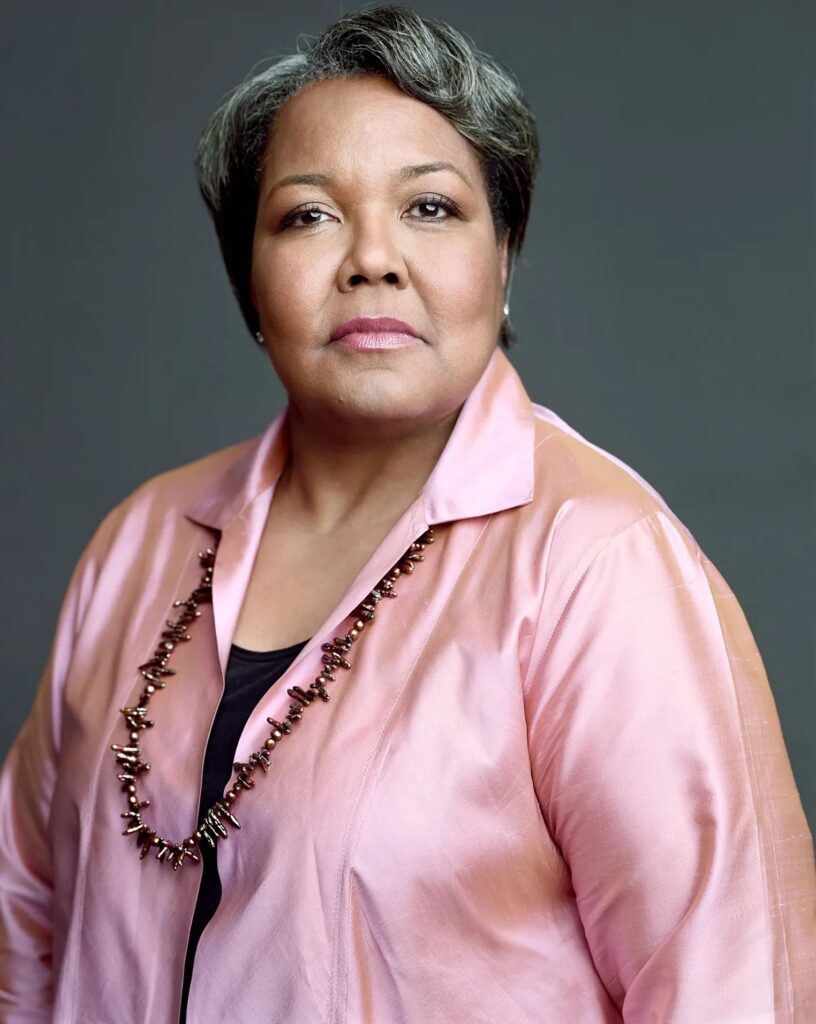
Julieanna Richardson was born in the midst of the Jim Crow era. As a young, nine-year old, the only Black student in her classroom, in Newark, Ohio, she wondered where were the Black leaders, the Black inventors. She heard of George Washington Carver, but surely, she thought, he couldn’t be the only one. Hungry for an historic Black individual with whom she could identify, she created her own ancestral home. When her teacher asked the class to tell the class what part of the world they originally descended from, she listened as each of her classmates claimed their ancestry – German, Italian, French – when it came little Julieanna’s turn, she told the teacher and the class that she descended from Native Americans. Then she added another little white lie “I’m part French,” she said.
From early childhood, Julieanna always dreamed of being in the theater as an actor or director, but her father had other plans for her. He wanted his daughter to become a lawyer.
However, her search for a Black person, other than George Washington Carver, who made a difference, became a part of her dream. And that incident in the all-white classroom in Newark, Ohio, made her determination even stronger to learn who were her heroes and besides her iffy Native American ties, and her fictitious partial French ancestry, where did she belong?
Julieanna says, “That feeling of not belonging lasted into my sophomore year.”
Her father had a friend at the Schomberg Center for Black Studies, and there she first experienced the power of oral history. She learned that there were Black writers and Black songs written by Black writers. She learned about Black actresses, like Butterfly McQueen. She conducted independent research on the Harlem Renaissance and poet and author Langston Hughes and did her honors thesis on Langston Hughes titled, “It’s all I got: Langston Hughes’ reconciliation of Black and American identities.”
During her Junior year at Brandeis, she was a visiting student at the University of East Anglia in Norwich, England. She returned to Brandeis in her senior year. Loretta Devine was also attending Brandeis at that time, where she was working on her MFA in Theater and she was in a play portraying a maid. Julieanna asked Loretta “Why are you playing a maid?”
The answer was simple: that was the only part she could get. Julieanna graduated Cum Laude from Brandeis in 1976, where she received her B.A. degree in Theater Arts and American Studies.
Although she studied and loved theater and graduated with a degree in theater, her father also got his wish and she was accepted into Harvard Law School. After graduation, she learned she could do pro bono work for Jenner and Block in Chicago. She worked on both corporate and commercial matters with an emphasis on corporate, banking, and copyright law.
She also represented Val Gray Ward, the director of the Kuumba Theater, which was perfect in terms of her ongoing interest in and love for theater.
So many good things came out of that experience; the major one, she feels, was coming to Chicago and making it her home.
Two years of practicing law was enough for Julieanna, and in 1982, she became the city of Chicago’s Assistant Cable Technical Administrator and later Chief Cable Administrator for the City of Chicago’s Office of Cable Communications, where she established the Chicago Cable Commission, the City’s regulatory body.
In 1985, she founded Shop Chicago, which featured local vendors and retail establishments. This was the first regionally based home-shopping channel and it reached 750,000 cable households in the Chicago area and garnered international attention. The format was a combination of home-shopping and infomercial formats.
That success led Julieanna to starting her own production company, SCTN Tele productions, specializing in corporate videos, cable TV programming, and new media.
In 1987, she started doing consulting. That year, she started the Axis Cable Company and the City of Chicago decided they would take over Chicago’s cable industry. “That was a very dark time,” Julieanna admits. But times didn’t stay dark.
In 1990, she attended a National Bar Association conference in Memphis, Tennessee. During that time, there was a lot of controversy about Clarence Thomas being appointed to the Supreme Court. Civil Rights Lawyer, Constance Baker- Motley and Pastor and Civil Rights Activist, Billy Kyles were arguing the case and Julieanna thought, “Nobody knows their names.” That’s when her big idea was born. She would archive the names of Black people who made or are making a difference.
She voiced her idea out loud, which ignited the concern of her two very dear friends, Valencia Book and Katherine Lauderdale. “They thought that dark place had taken over my mind,” she said. So, Valencia and Katherine decided to do an intervention.
They asked two questions: 1. Does such an archive exist? 2. If it does exist, would anyone be interested?
Prompted by those questions, Julieanna began talking to and interviewing people and having her own production company, she was able to record those interviews. In 1999, The HistoryMakers officially started. As for her once skeptical friends, she says, “Valencia and Katherine were helpful and supportive and I don’t know where I would be without their support.”
In February 2000, she conducted her first interview with Radio Executive, Barry Mayo,
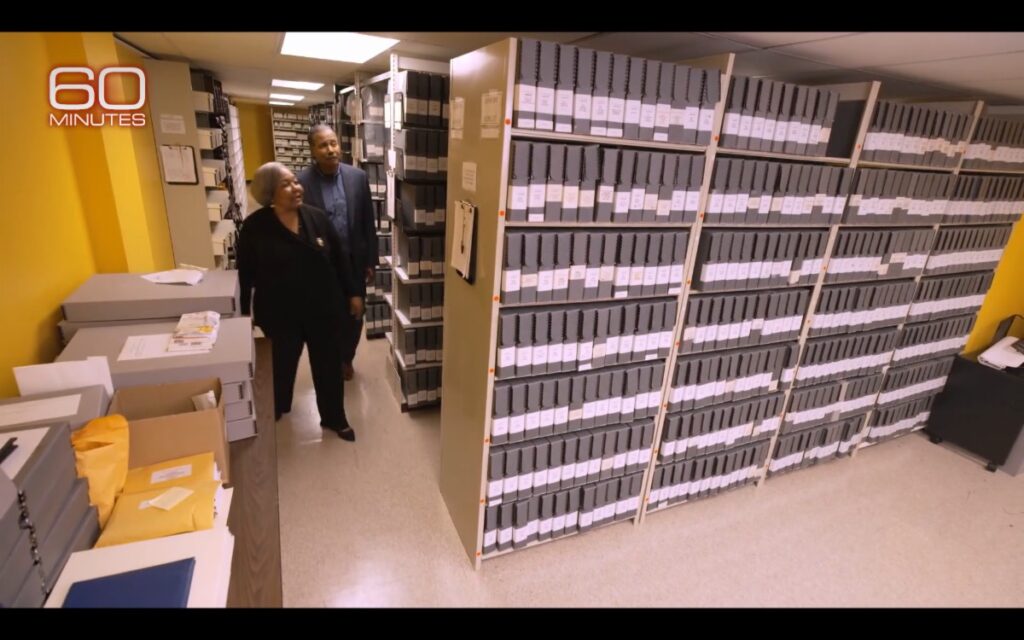
In 2012 the Library of Congress became the repository for the world’s largest digital archives of Black history makers. Her dream was realized in a huge way. Today, with The HistoryMakers Digital Archive, users can access thousands of first-person accounts of African American leaders from desktop, portable devices, and smart phones 24 hours per day, 7 days per week, anywhere in the world.
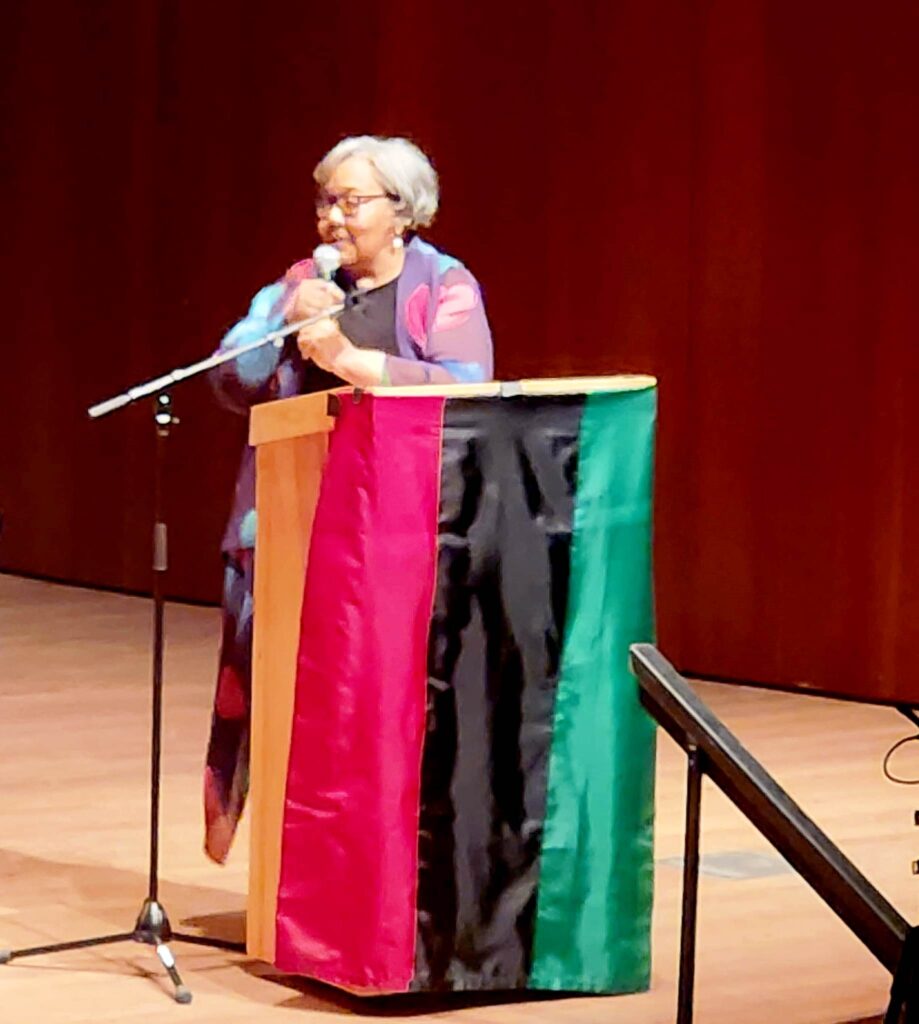
On Saturday, November 8, the Chicago Urban League will award Julieanna L. Richardson, founder and president of The HistoryMakers, with its Humanitarian Award in recognition of her work to chronicle and preserve African American history through video.
Thanks to Julieanna Richardson’s hard work, dedication and commitment to her dream, no little Black girl will ever have to wonder if Booker T. Washington was the only Black person who ever made a difference.